Why 3 days in Whistler feels too short
The first time I tried to “do Whistler” in a long weekend, the friction showed up before the first run: rentals, lift lines, and a quick grocery stop quietly ate the same morning I’d mentally budgeted for warm-up laps. Three days sounds generous from Vancouver, but once you subtract travel time and the reality that you won’t ski bell-to-bell without burning out, you’re really planning two big ski blocks plus one shorter, more tactical day.
It also feels short because Whistler-Blackcomb isn’t one mountain choice—it’s a constant set of condition calls. Alpine can be brilliant when it’s clear, but useless when visibility drops; Blackcomb can ski better in storms, but that can concentrate crowds in the same “safe” zones. If you don’t pre-decide a simple progression (easy start, big middle, repeat-best finish), you end up spending paid lift time debating routing instead of banking vertical.
Day 1: Arrival + warm-up laps (Must: pick up rentals; Opt: Village stroll; Skip: first-day peak hunt)
I’ve learned to treat Day 1 like a logistics sprint disguised as a ski day: the moment you think “we’ll just grab rentals quickly,” you’re already behind. If you’re driving up from Vancouver, aim to park, collect gear, and be clicking in by late morning rather than chasing a heroic first chair you probably won’t reach without stress. Off-mountain rentals can be cheaper, but the convenience of slopeside pickup wins on a short weekend—especially if something doesn’t fit and you need a fast swap.
For warm-up laps, pick one mountain and stay disciplined. On Whistler, Olympic/Big Red territory is an efficient way to get your legs under you with forgiving blues, and you can slide toward Franz’s or similar groomers if visibility is decent. On Blackcomb, the mid-mountain groomer network off Wizard tends to feel more straightforward when you’re still calibrating speed and edges. What doesn’t work well on Day 1 is bouncing between lift pods “just to sample everything”—it creates dead time and you’ll feel it tomorrow.
Optional but worthwhile: a Village stroll as a deliberate decompression, not an open-ended wander that replaces dinner. If you’ve got energy, keep après simple and early; if you push late, Day 2’s first hour usually pays for it. And skip the first-day peak hunt (Harmony, Symphony, or Glacier): even when lines look manageable, weather and navigation decisions can turn a warm-up into an expensive, low-vertical scavenger hunt.
Day 2: Big mountain day (Must: Peak-to-Peak; Opt: lesson/guide; Skip: long lunch breaks)
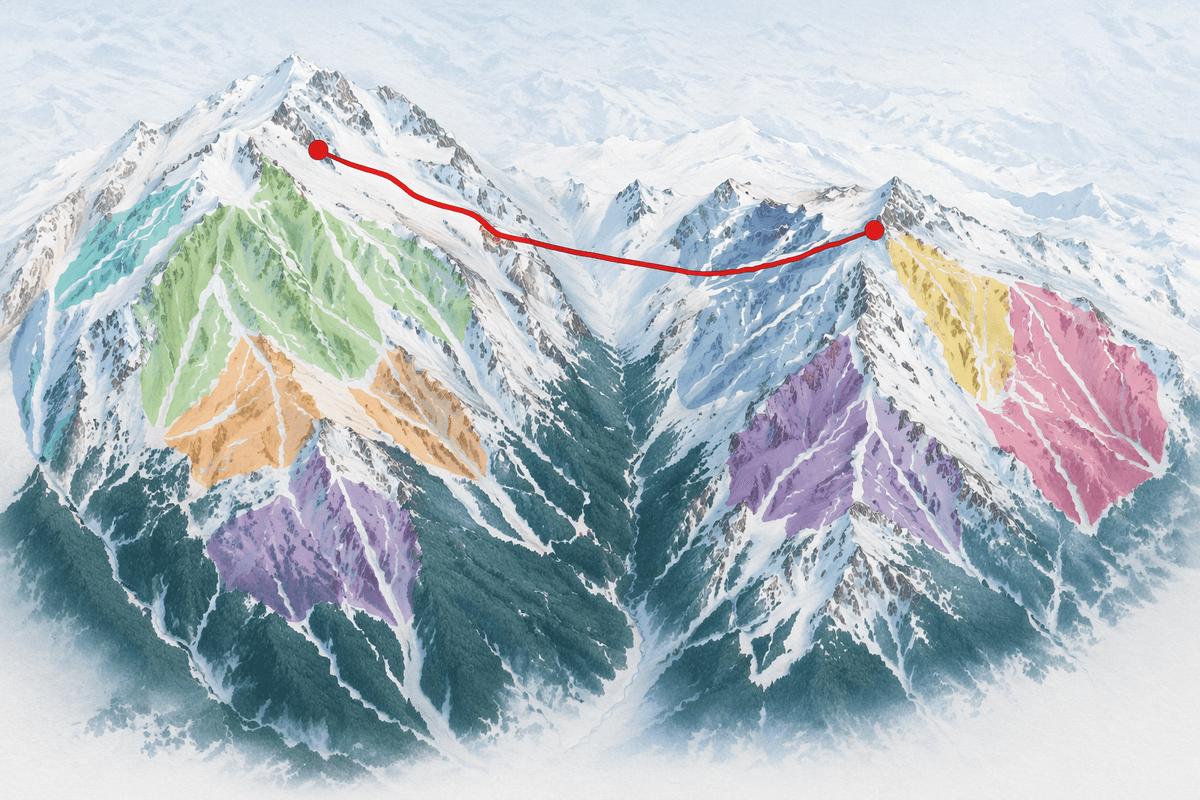
The decision point on Day 2 is whether you’re willing to spend your best legs on a single, high-leverage connection: Peak-to-Peak. When it works, it’s the cleanest way to turn Whistler-Blackcomb into one continuous ski day instead of two half-days separated by debating where to be. The constraint is weather—if winds are up or visibility is flat, committing early can backfire because you’ll burn time repositioning and still end up lapping mid-mountain. I like starting on the mountain that’s clearer at breakfast (even a quick look out the window helps), then using Peak-to-Peak once you’ve banked a few confidence laps and can actually read the snow.
Routing-wise, keep your first “big” push simple: one peak zone, then one traverse, then settle into a pod that skis fast. On Whistler, that can mean Harmony if it’s clear enough to navigate without stopping every turn; on Blackcomb, Glacier can be excellent, but it funnels people quickly when it’s the obvious choice. If you and your friend are solid intermediates, this is the one day where a half-day lesson or a guide can pay off—not for fancy terrain, but for pace and line choice when the mountain’s busy.
What doesn’t work well is a long sit-down lunch: the village-facing restaurants are convenient, but you lose momentum and often re-enter the lift system right as crowds thicken. If you need a reset, make it tactical—quick fuel, warm hands, back on snow—because the afternoon reward in Whistler is usually “less line, softer legs,” and you only get one of those for free.
Day 3: Favorites + exit plan (Must: repeat best zone; Opt: spa/Scandinave; Skip: new gear experiments)
On Day 3, the first real decision is whether you’re skiing for a final “statement lap” or for a smooth drive back to Vancouver without feeling wrecked at your desk on Monday. I like treating this as a repeat-best morning: go straight to the zone that delivered the most consistent snow and least faff yesterday, even if it’s not the most iconic. Chasing a brand-new peak or a totally different mountain can work if conditions flipped overnight, but it often turns into extra traverses, wrong turns, and one too many “let’s just see” debates while your legs are already running on fumes.
If yesterday’s win was fast groomer laps, lean into that and bank efficient vertical early—mid-mountain pods tend to be more forgiving when visibility is mixed and you’re trying to keep pace without risky fatigue. If your best runs were up high, still keep the first hour conservative: lines and wind holds are more annoying on a shorter day because you don’t have time to “make it back.” Aim to be pointed toward your exit plan by early afternoon, not squeezing one more lap while you’re watching the clock.
The optional move that actually complements hard skiing is Scandinave (or any proper spa reset), but only if you commit to it instead of half-spa/half-skiing until close. It’s not the cheapest add-on, and the shuttle timing can be a constraint, yet it’s one of the few things that reliably converts Day 3 from “limp to the car” into “drive home feeling finished.” And skip new gear experiments today—Day 3 is when one bad boot tweak can turn into a slow, cranky finale.
Leave knowing you skied “enough”
The last morning, we had that familiar debate at the base: squeeze every last lap, or call it while things still feel clean. What worked best was picking a hard stop time (usually 1:00–2:00 p.m.) and treating anything after that as bonus. You’ll ski faster knowing you’re not bargaining with the clock, and you avoid the late-day mistake of taking “one more” that turns into a boot-pack of stairs, a parking-lot slog, and a tense drive back down the Sea-to-Sky.
To leave feeling like you actually got your money’s worth, I like a simple closer: two confident laps in your favorite pod, then one “photo lap” you’d happily repeat. It sounds corny, but it prevents the classic Whistler ending—half a day spent traversing to prove you “saw” something new. If your legs are cooked or visibility is sketchy, lean groomers and finish early; you’ll remember the rhythm more than the extra vertical.