Why Iceland by ship feels like the smartest shortcut
The first time I mapped a 7–10 day Ring Road loop, the math got uncomfortable: long driving days, hotel check-in windows, and “maybe tomorrow” weather all competing with limited PTO. A small-ship circumnavigation can feel like a shortcut because the route planning is done for you—wake up in a new region without losing half a day to steering wheel time.
What works especially well for couples who prioritize comfort is the compression of Iceland’s highlights into a steady rhythm: port mornings, guided shore time, and a warm cabin instead of another repack-and-reload. The constraint is real, though: you’re trading depth for breadth, and your best moments will depend on how long you’re actually in each port (and whether tendering or schedule shifts eat into that time).
Cost-wise, the headline fare can look steep, but it also replaces a stack of line items (car, fuel, parking stress, last-minute lodging). Excursions can still add up quickly—so the “shortcut” works best when you’re selective, not when you try to buy every shore day back with pricey tours.
What “circumnavigation” covers: ports, pacing, seasons
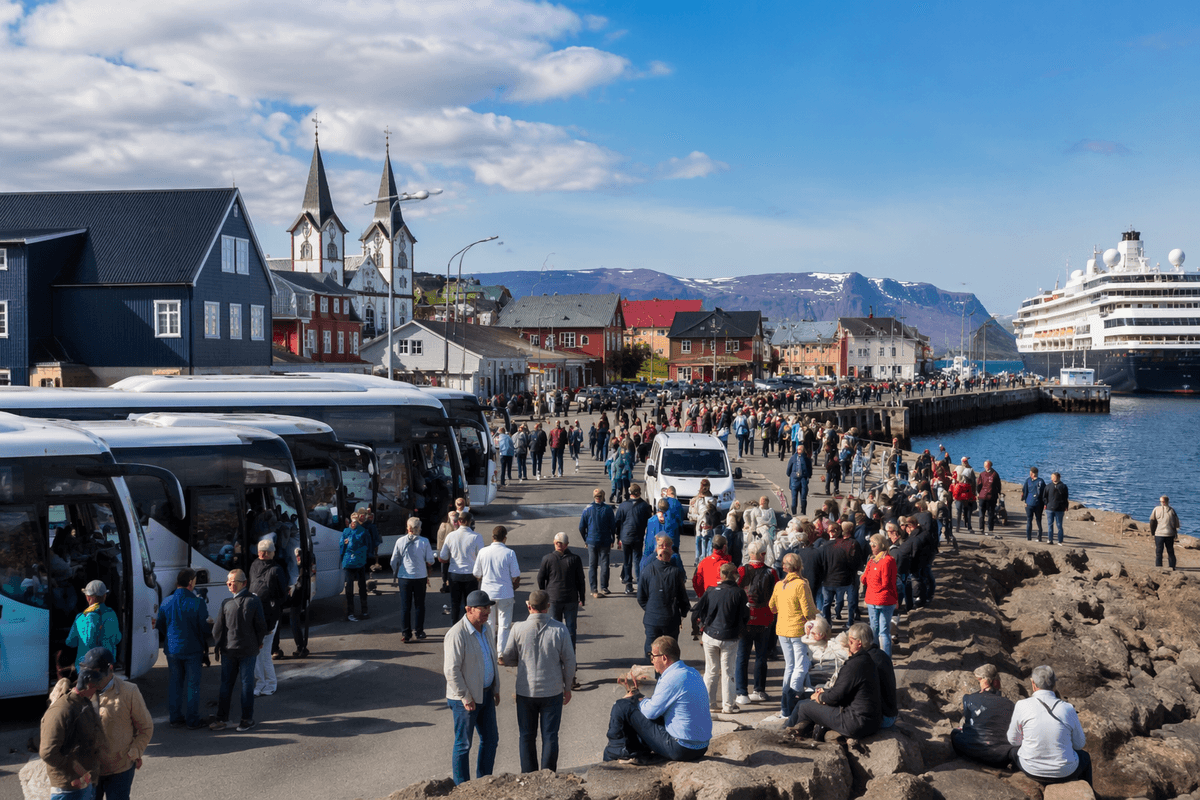
I remember staring at the word “circumnavigation” on the itinerary and wondering if it was marketing shorthand for “we’ll see Reykjavík and a couple fjords.” In practice, it usually means you’re working your way around Iceland’s perimeter with a mix of bigger anchors (often a Reykjavík turnaround) and smaller towns on the north/east/west edges—places that are gorgeous but would cost you real hours to reach by car in a 7–10 day PTO box. What doesn’t work as well is assuming it’s a true Ring Road replacement: you’ll see a lot of coastline and regional variety, but the deep interior and stop-when-you-want spontaneity stay mostly in the self-drive column.
The pacing is the point: most days are a single port, a defined shore window, then you “commute” while you sleep. That’s efficient, but it’s also a constraint—if the ship tenders, if the pier time shifts, or if you pick an excursion with a long transfer, your usable time on land can shrink fast. Season matters even more than people expect: shoulder season can mean fewer crowds and moodier light, but also more schedule vulnerability; peak summer buys you longer days, yet the popular stops feel busier and tours sell out earlier.
Why Windstar fits Iceland: size, style, access
My first real “Windstar vs. car” moment happened at the pier: the ship felt small enough to be calm, but still like a proper hotel that moves. That scale matters in Iceland because ports aren’t built for megaships—Windstar’s smaller footprint generally means fewer lines to get off, less herding on board, and a better chance of using smaller docks or anchoring closer when conditions allow. It’s not magic, though: if tendering is required, you’re still at the mercy of sea state and the operational pace of moving everyone safely, which can quietly shave an hour off your best-laid plan.
The style fits mid-career PTO math: you get consistent comfort (real showers, a predictable bed, no daily suitcase Tetris) while still waking up in places that would demand long self-drive days. The limitation is flexibility—Windstar makes Iceland feel “accessible” by sequencing regions efficiently, but it also decides your timing. If you’re the couple that wants to linger for golden-hour photos or detour for a random hot spring you spotted on a map, the ship’s schedule can feel like a polite but firm ceiling.
Access is also about crowds. You won’t be alone on shore, but you’re typically arriving with far fewer passengers than the big-ship wave, which changes the tone on smaller-town walks and museum stops. The catch is that popular excursions can still sell out early, so the access advantage works best when you book the few high-demand days and leave the rest intentionally open.
Shore days that matter most: wildlife, waterfalls, towns
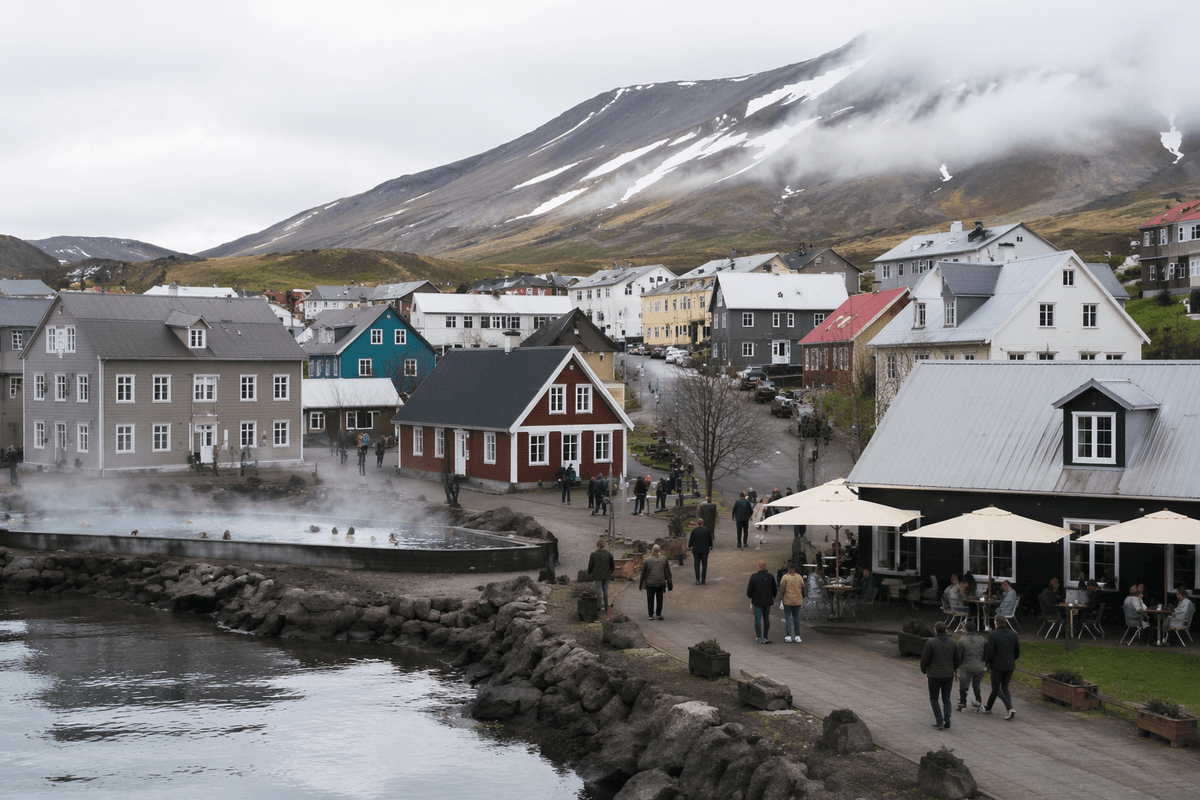
On our first “real” shore morning, I caught myself doing the cruise version of mileage math: how much land time do we actually have after breakfast, tendering (if needed), and the inevitable “we’ll just take one more photo” drift. That’s why I think the shore days that matter most are the ones where the ship’s fixed window still delivers a complete experience—wildlife by boat, a waterfall loop with a clean turnaround point, or a compact town you can enjoy without a long transfer eating your best hours.
For wildlife, the strongest days are the ones built around a single, high-probability target—whales from Húsavík-style departures, seabirds on cliffy coastlines, or seals where the zodiac or small-boat approach stays nimble. It works when the operator can adapt to conditions; it doesn’t when wind picks up and the “wildlife cruise” becomes a bumpy hour of scanning gray water. If you’re even mildly sensitive to motion, pick one wildlife day, not three, and make it the one with the shortest open-water exposure.
Waterfall days are where Windstar can feel almost unfairly efficient: you’re not driving the long connectors, so your energy goes into the stops that photograph well and feel iconic. The constraint is that many waterfall routes are bundled with long bus transfers, and that’s where a ship day can start to resemble a self-drive day—just with less control over pacing. Town-focused ports (think easy walks, a museum, a café crawl, maybe a local pool) are the pressure-release valve: less “must-see,” more Iceland-at-human-speed, and a smarter choice when the weather looks undecided.
Practical decisions: cabins, excursions, weather, packing
The most practical fork in the road showed up before we even booked: cabin category versus “we’ll spend no time in the room anyway.” In Iceland, you actually might. A slightly larger cabin (or at least one with a window) buys you a buffer when the deck is cold, damp, or crowded, and it’s where you’ll recover if a windy sea day makes you feel off. The constraint is cost creep—upgrading the cabin and then buying big-ticket excursions can turn “moderate-high budget” into “why didn’t we just do a luxe self-drive?” fast.
Excursions are where circumnavigation either stays efficient or starts leaking value. I’d prioritize one “hard-to-self-drive-in-7-days” day (remote fjord scenery or a longer wildlife run) and one comfort-forward day (town + geothermal pool), then leave at least one port deliberately unbooked so you can adapt to weather. The thing that doesn’t work is stacking long coach transfers back-to-back; it recreates the Ring Road fatigue, just with less control over stops.
Packing is mostly about accepting you’ll be outside in sideways weather for short bursts: waterproof shell, grippy shoes, thin layers, and a small daypack you can carry on uneven docks. Bring motion remedies if you’re even slightly prone—better to have them and not need them than to lose a day to queasiness when the sea decides your schedule, not your spreadsheet.
Is this the best way for you to see Iceland?
The deciding moment for most couples is realizing you’re not choosing “Iceland” versus “not Iceland,” you’re choosing what you want to spend your limited PTO doing. If you’ll resent long driving days, hotel roulette, and daily replanning around weather, Windstar’s moving-hotel setup is a clean fit—even with the hard constraint that port hours (and occasional tendering) cap how deep you can go.
If, however, your happiest memories come from pulling over whenever the light turns dramatic, lingering past dinner, or chasing a detour because the forecast shifted, a self-drive will feel more like the real Iceland—at the price of more effort and more decision fatigue. My cue: pick the ship if comfort and coverage are the priority; pick the car if control and depth are.