Why “brain foods” feel elusive with age
It can start as a small hesitation: the word you want is “right there,” but it arrives a beat late, especially on afternoons when lunch felt a little too light or a little too fast. You try a “brain food” smoothie for a week, then wonder why the effect is hard to notice—some days you feel sharper, other days strangely flat.
Part of what makes brain foods feel elusive with age is that the brain often responds more to patterns than to single ingredients. If meals regularly swing from low fuel to a quick spike, thinking can follow that same arc—briefly energized, then foggier once the dip hits. Over time, those repeated swings can also nudge cravings and sleep in unhelpful directions, which quietly feeds back into focus the next day.
That’s why the most useful “signal” often isn’t a superfood list—it’s what happens after you eat: a calm, steady mental pace versus the familiar pull toward snacking, irritability, or a heavy-eyed haze that makes simple tasks feel oddly effortful.
Blood sugar swings and the foggy thinking loop
It’s often the “2 p.m. moment” that gives it away: you re-read the same email line twice, not because it’s hard, but because your attention keeps sliding off it. Sometimes there’s a little shakiness or a low-grade irritability underneath, and it’s easy to blame sleep or stress—until you notice it tends to show up after certain lunches.
A meal that leans heavily on quick-digesting starches or something sweet can push blood sugar up fast, and the brain tends to enjoy that brief lift. The problem is the drop that can follow when insulin pulls sugar out of the bloodstream quickly. In that dip, thinking may feel slower and “thicker,” and the body often interprets it as a need for more food—usually something equally fast. That’s the foggy loop: a spike, a crash, a craving, and another spike that doesn’t quite restore steady focus.
A busy morning, a longer gap between meals, or even a brisk walk after eating can change how strong the swing feels. But if the same pattern keeps showing up—post-meal sleepiness, urgent snacking, or a wired-but-muddy feeling—it can be a useful clue that steadier fuel might matter more than “perfect” ingredients.
Omega fats and the overlooked role of repair
Sometimes it’s not fog that stands out, but a kind of “frayed” feeling by evening—your brain works, yet it feels less resilient. You might even eat a perfectly reasonable lunch and still notice that focus doesn’t bounce back the way it used to, especially after a stressful day or a short night.
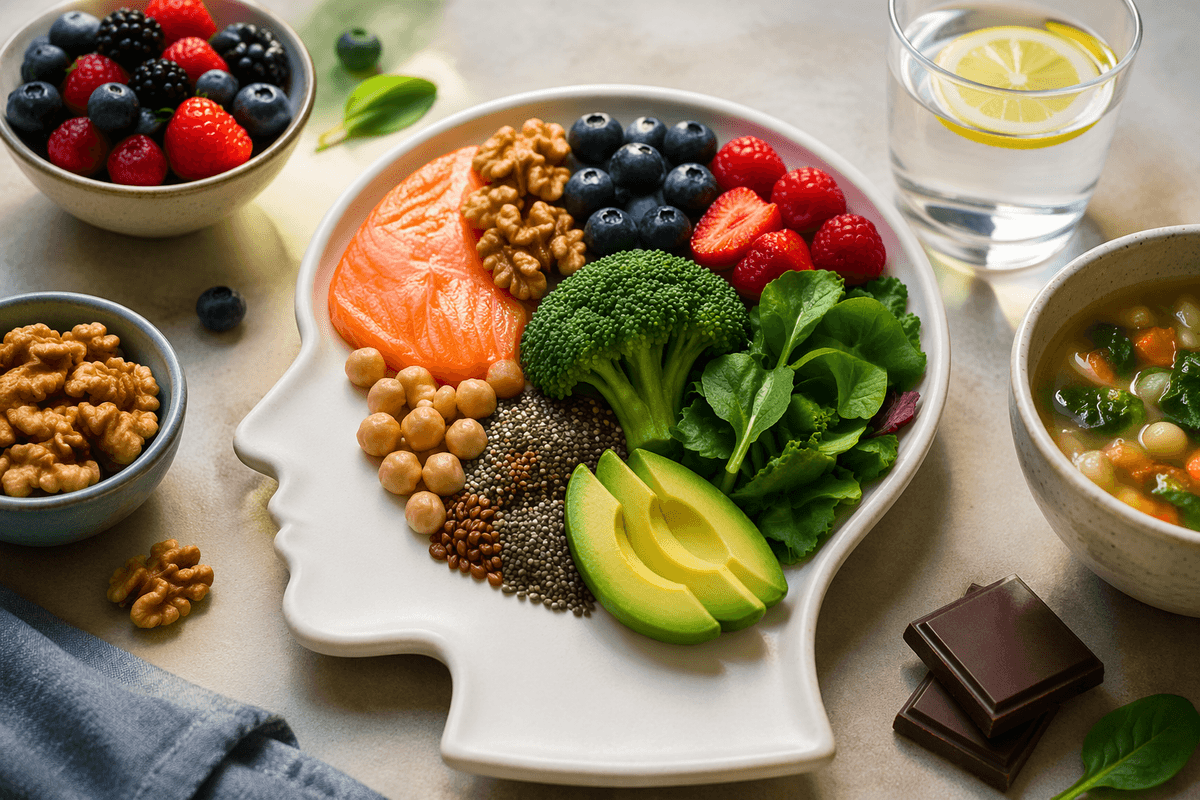
That’s where omega fats tend to be misunderstood. People often treat them like an instant brain-boost, then feel disappointed when nothing dramatic happens. But omega-3s, in particular, are more about upkeep than a jolt: they’re tied to the structure of brain cell membranes and to the body’s repair-and-calm signaling that helps manage everyday wear from inflammation and oxidative stress. If that background “repair budget” runs low, thinking can feel noisier—more distractible, more easily overstimulated—even when blood sugar is fairly steady.
In real life, the pattern can be subtle and inconsistent. Weeks with more fatty fish, walnuts, chia, or flax may not feel like a switch flipping, but they can line up with fewer edgy afternoons and a steadier mood after meals. These shifts are slow, and it’s easy to miss them unless you’re paying attention to the longer arc.
Color on the plate as a stress-buffer habit
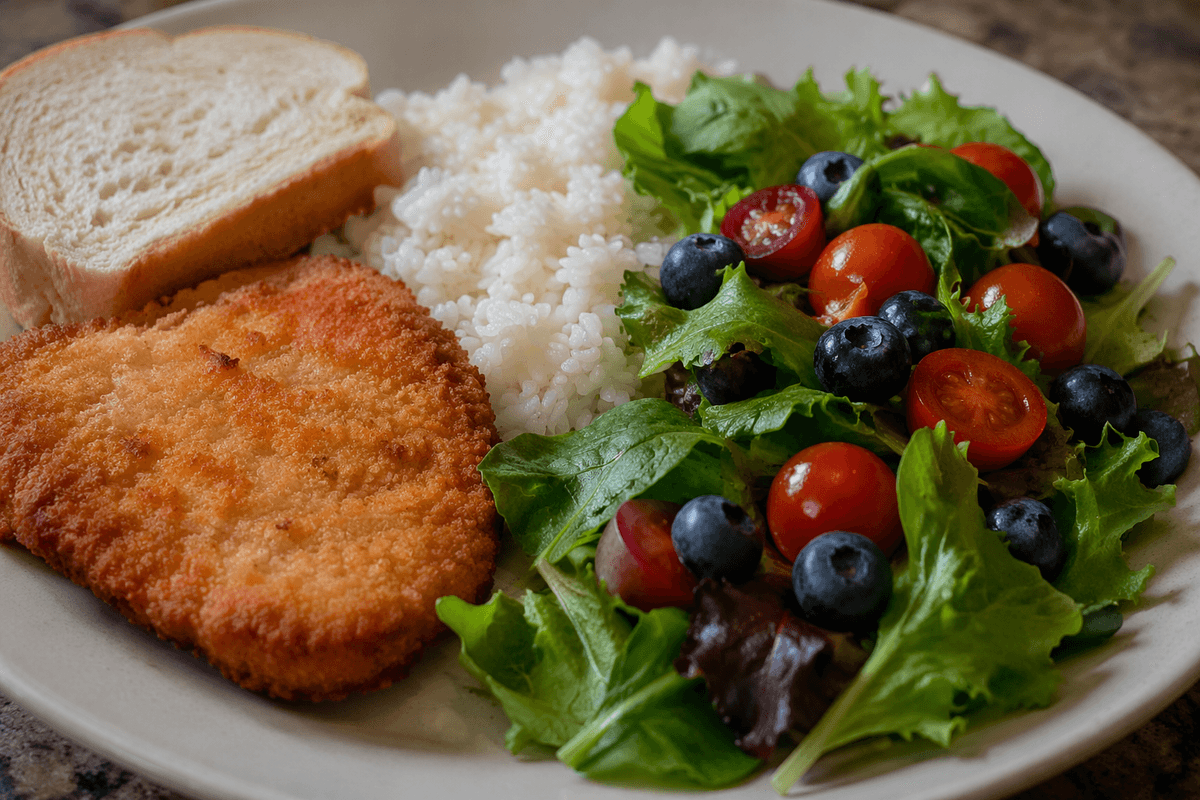
You notice it most when dinner looks beige: the same chicken, the same rice, the same breaded something—filling, familiar, and somehow a little mentally dull afterward. Then on another night, you throw in a handful of greens or a side of berries without thinking much about it, and the evening feels steadier, even if your day was just as stressful.
“Eating colorful” can sound like a wellness slogan, but in practice it often means you’re getting more of the plant compounds that help the body handle everyday stress load—along with fiber that slows digestion and takes some of the edge off post-meal swings. Color tends to tag along with nutrients that support blood vessels and help manage oxidative wear, which matters when stress is already pushing your system toward higher demand.
A bright salad doesn’t erase a hard week, and some people feel bloated or “too full” if they suddenly pile on raw vegetables. Still, when color shows up as a small, repeatable habit—something you add rather than something you overhaul—it can quietly make meals feel less like a drain and more like a buffer.
Gut, brain, and mood: food as feedback
It’s easy to miss at first: a little bloating after lunch, a faint pressure under the ribs, and then—an hour later—your patience feels shorter than it should. You might assume it’s just the meeting schedule or “getting older,” but the timing can be oddly specific, as if your mood is reacting to your plate more than your calendar.
The gut and brain stay in close contact through nerves, hormones, and immune signals, so discomfort in digestion doesn’t always stay “local.” In some situations, a meal that’s low in fiber and higher in ultra-processed fats or additives may move through the system in a way that feels more inflammatory or irritating, while a fiber-rich meal can ferment more slowly and produce compounds that tend to support a steadier internal tone. The fiber changes can also backfire at first—more gas, more fullness—so the same “healthy” choice doesn’t always feel calming right away.
Over time, the useful clue is less about perfection and more about repeats: if certain meals reliably line up with a flatter mood, restless sleep, or that “thin-skinned” feeling the next morning, it may be your body running a feedback loop you can actually notice.
Hydration and minerals behind quiet mental stamina

By mid-morning, it can feel like your brain is “online,” but a little brittle—head slightly tight, eyes dry, and focus easier to drop than to hold. You drink a big glass of water and wait for a clean lift, but the change is uneven. Sometimes it helps. Other times you just feel like you’re sloshing liquid without getting that steady mental stamina back.
Part of the confusion is that hydration isn’t only about water; it’s also about minerals that help your body keep fluid where it’s useful. Sodium, potassium, and magnesium influence fluid balance, nerve signaling, and muscle function, so when intake is low, losses are higher (heat, exercise, lots of coffee), or meals are very low in salt, the “tired and foggy” feeling can show up even without obvious thirst. That can look like low motivation or distractibility, when it’s really your system struggling to maintain a calm baseline.
It’s not always a simple fix, because day-to-day needs shift with weather, medications, and how processed or whole your meals have been. But when your concentration improves after a brothier lunch, a yogurt-and-fruit snack, or a meal with beans and leafy greens, it’s a quiet clue: sometimes the brain isn’t asking for a boost—just better balance.
When “eating cleaner” creates surprising brain discomfort
It can be a strange trade-off: you swap your usual breakfast for something “cleaner,” and by late morning your head feels light and a little irritable, as if your brain is running on a thinner signal. You might even feel proud of the choices and still find yourself staring at a simple task, unusually impatient with how long it’s taking.
Often it’s not the cleaner food itself—it’s what quietly disappeared. When people cut carbs hard, drop salt, or slash overall calories, the body can read it as stress: blood sugar may run lower than you’re used to, and fluid balance can shift, especially if you’re also drinking more coffee or eating more potassium-rich produce without much sodium. That mix can feel like “healthy” discipline on paper, but in real life it can show up as headaches, wooziness, and fuzzy recall.
There’s also the fiber jump: more beans, raw vegetables, and whole grains can be great long-term, yet a sudden increase can cause bloating and a tense, uncomfortable belly that crowds out calm focus. If the discomfort keeps repeating, it’s usually a sign to adjust the pattern—not abandon the idea—so your brain gets steadier fuel instead of a daily tug-of-war.