Why 10 days in Spain feels too short
I realized 10 days in Spain feels “plenty” only until you start pinning must-dos: a Prado morning, a Gaudí afternoon, an Alhambra slot, a flamenco night. On the map, Madrid–Barcelona–Andalusia looks tidy; in practice, every move costs half a day once you count checkouts, stations, and late hotel arrivals.
The real squeeze isn’t distance, it’s depth. Museums reward slow time (and punish Monday closures or sold-out timed tickets), while old quarters are best when you’re not racing the clock. You can cover Madrid and Barcelona comfortably, or you can add Seville/Granada for the Moorish architecture you can’t replicate elsewhere, but trying to do all of it at “two nights each” turns meals into logistics.
Trains make the route doable, but they don’t erase friction: the fastest departures sell out, station transfers eat energy, and some cities go quiet for siesta right when you expected to “power through.” Ten days works if you accept a bias—either big-city art and neighborhoods, or a south-focused history run—rather than pretending you’ll do both at full intensity.
Days 1–2: Barcelona’s art, old quarters, food
Landing in Barcelona, the first decision that actually mattered wasn’t “Sagrada Família or Park Güell,” it was whether to lock a timed entry before doing anything else. If you don’t, your Day 1 can get quietly hijacked by sold-out slots and you end up treating Gaudí like a drive-by. I liked putting Sagrada Família late afternoon (better light, less frantic) and using the earlier hours for a slower first pass through the Gothic Quarter—because it’s free, flexible, and forgiving when your flight delay turns your “morning plan” into a noon scramble.
For Day 1, I’d keep the old-city walking cluster tight: Cathedral area → tiny lanes of the Barri Gòtic → El Born. It works well on foot, but it’s also where your pace can implode if you over-schedule museums on top of it. Picasso Museum is an easy add if you can get a ticket; if not, don’t force it—Barcelona punishes rigid plans more than Madrid does because the crowds compress into fewer walkable corridors.
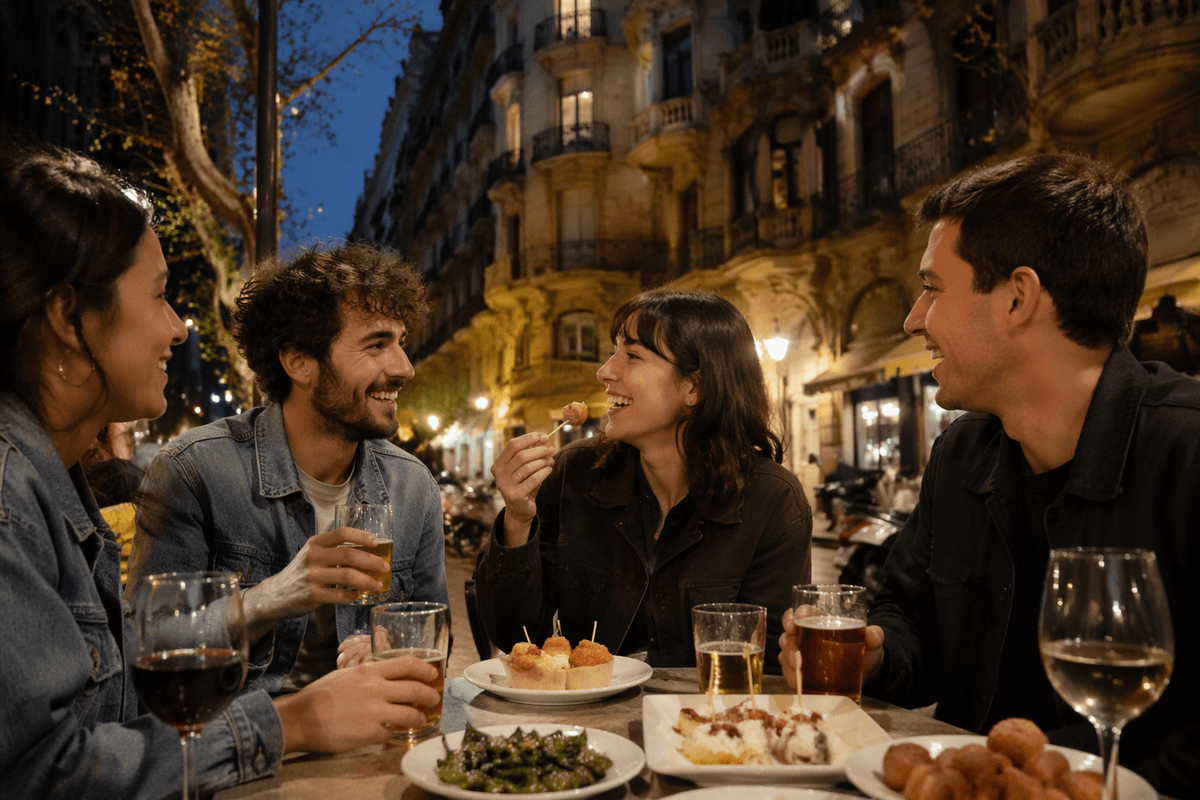
Day 2 is when Barcelona’s food logistics become the real constraint: lunch runs later, some places are closed between services, and an “early dinner” can feel like eating alone. I’d use that to your advantage—do a longer art block (MACBA or a second Gaudí site) and plan tapas as a roaming dinner in Eixample rather than a single reservation. You’ll walk more than you expect, but the neighborhood shift pays off: less tourist density than the Ramblas-adjacent zone, and you finish the Barcelona leg feeling fed, not just “checked in.”
Days 3–4: Madrid core, plus Toledo history hit
On the Madrid arrival day, my first small hesitation was whether to “do something big” immediately or treat the transfer like a tax and plan around it. Madrid rewards structure more than Barcelona, but only if you accept that Atocha-to-hotel-to-museum eats a real chunk of daylight. I’d anchor Day 3 around one major museum block—Prado if you want the canonical hit, Reina Sofía if modern art is your higher priority—and then let the evening be neighborhood-based (Literary Quarter into La Latina works) rather than chasing another ticketed sight across town when your legs are already negotiating jet-lag and metro stairs.
Day 4 is where people either nail the pace or blow it up: Toledo is close enough to feel “easy,” but it still behaves like a full day once you include the walk up from the station and the heat bouncing off stone. The train ride is quick and clean, yet it doesn’t solve the crowding in the historic core—midday can feel like a slow-moving funnel. I liked going early, picking a single headline interior (cathedral or a synagogue/museum pairing), and then giving yourself permission to just wander viewpoints instead of trying to collect every monument.
Back in Madrid, the temptation is to squeeze in “one more” museum, but the better use of your late afternoon is a lighter reset: Retiro Park, a calm dinner hour, and an earlier night. You’ll pay for overextending here when the southbound train days start.
Days 5–7: Seville and Córdoba, Moorish Spain
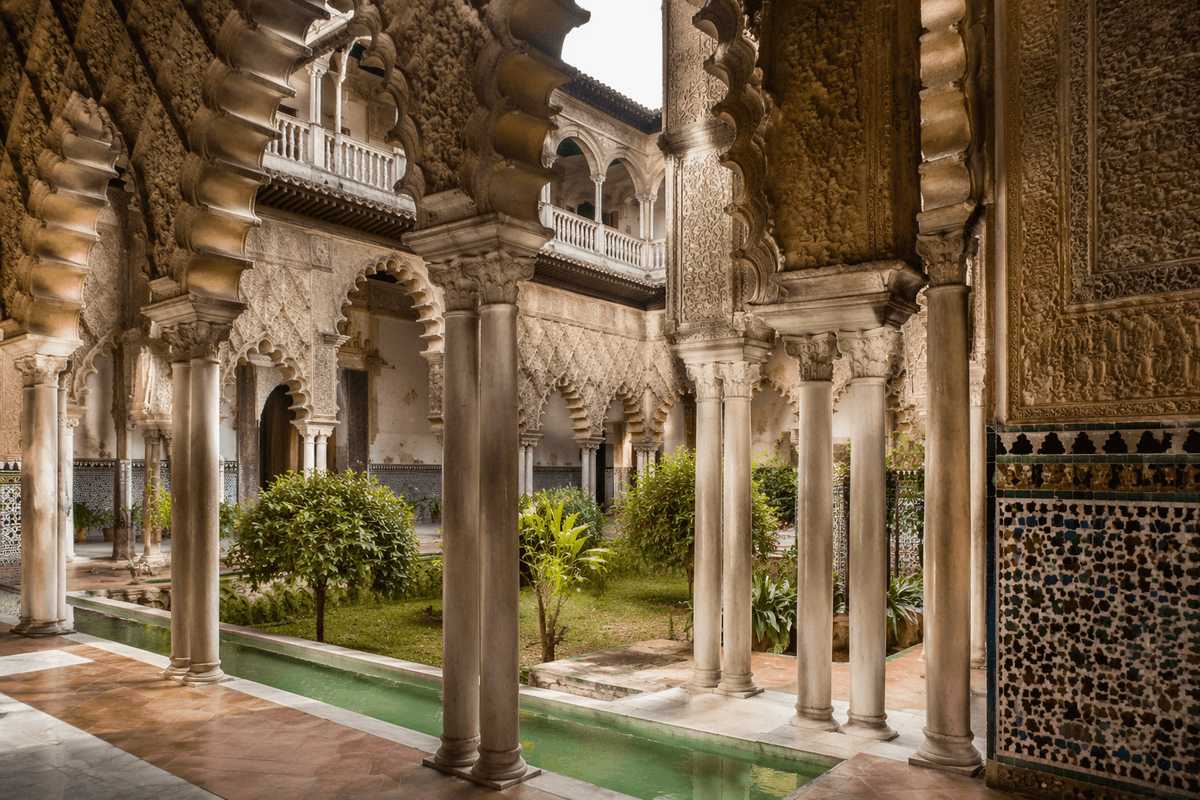
I booked the southbound AVE for Day 5 thinking I’d “arrive and start sightseeing,” but Seville made it clear fast that heat and timing run the schedule. If you land around midday, the walkable center is gorgeous and also quietly punishing—stone, sun, and long lines colliding at once. I’d choose one big interior for the afternoon (the Alcázar is the obvious one), then keep the evening flexible for Triana or a slower tapas crawl; trying to stack the cathedral + Giralda on the same arrival day is where first-timers start to feel like they’re touring Seville through ticket queues.
Day 6 is when Seville rewards focus. The cathedral works best early (or late) because midday crowds compress hard, and climbing the Giralda is more effort than it sounds when you’re already carrying yesterday’s train-day fatigue. I liked pairing a structured morning (cathedral + a specific neighborhood walk like Santa Cruz) with a low-commitment afternoon—because siesta hours and closed kitchens can make a perfectly “efficient” plan feel like a dead end if you’re hungry at 4 p.m.
Córdoba on Day 7 is a high-impact day trip, but it isn’t free: you’re buying another set of station transfers and timed-entry pressure. The Mezquita-Catedral is worth anchoring the day around, yet the old Jewish quarter can get saturated by midday groups. Go early, keep lunch simple, and accept that Córdoba is best as a single strong hit—trying to turn it into a full checklist day is how the return train back to Seville turns stressful instead of restorative.
Days 8–9: Granada’s Alhambra, then coast reset
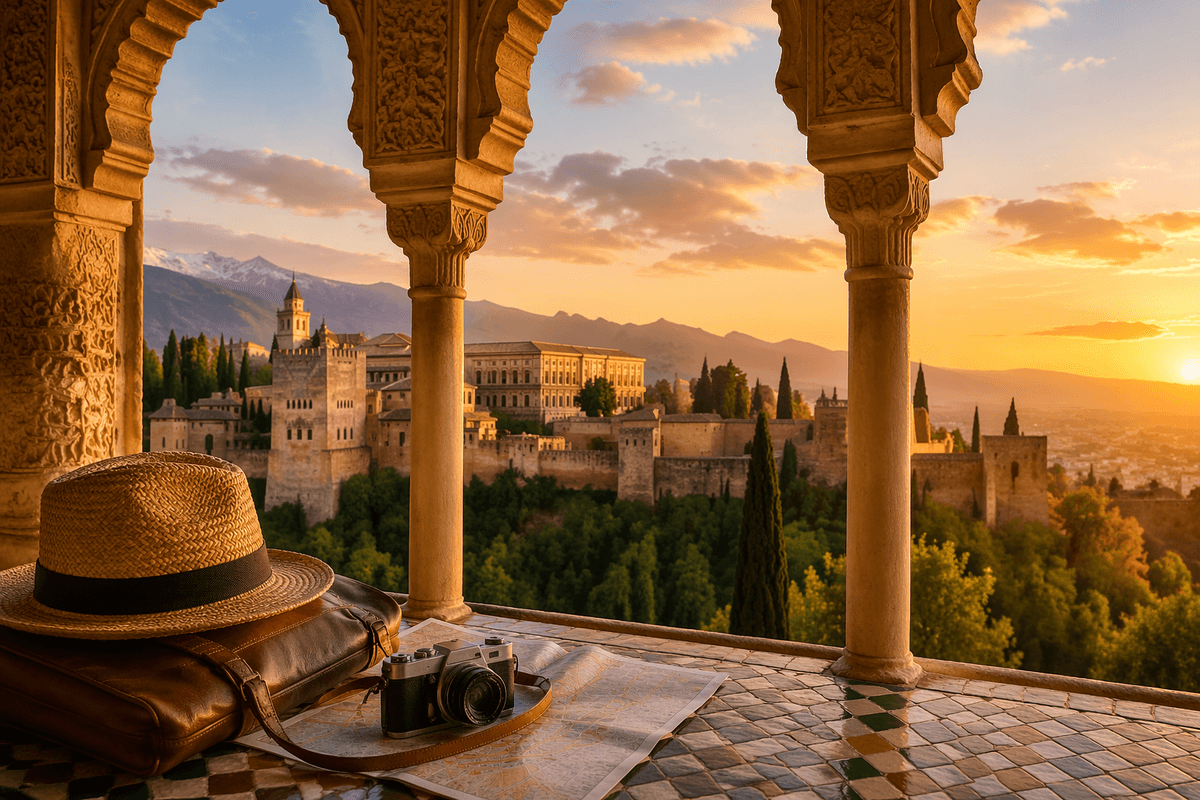
The moment Granada got real for me was staring at Alhambra ticket options and realizing the “best day to go” was the day with availability, not the day that fit my tidy plan. If you’re coming from Seville on Day 8, build the whole day around a single timed entry (Nasrid Palaces especially) and treat everything else as optional—because a late train or a slow hotel check-in can turn a too-tight schedule into a sunk cost. I’d rather arrive, drop bags, and do an unglamorous grocery/water run than sprint uphill and start the Alhambra already annoyed.
On Day 9, the Alhambra works best with an early start and a realistic attention span: it’s not just “one palace,” it’s gardens, viewpoints, and a lot of walking that gets hotter and more crowded as the day goes on. If you try to “add” Albaicín afterward, pick one clear target (a viewpoint at sunset, not a full neighborhood conquest) so you’re not climbing stairs on tired legs.
Then the coast reset: even if you’re not a beach traveler, a short hop to the coast (or even just a quieter base outside the Granada core) can buy you sleep and mental space. You lose some pure museum time, but you gain the kind of calm evening that makes the final day in Spain feel intentional instead of purely logistical.
Day 10: Wrap-up, souvenirs, and what you’ll return for
Day 10 always starts with a small lie: that you’ll “just quickly” pick up souvenirs after breakfast. In reality, your final morning is a timing puzzle—hotel checkout, luggage storage, and whatever train/flight you’ve booked back through Madrid or Barcelona. What worked for me was treating souvenirs as a bounded errand: one market or one shopping street, then stop. If you let it sprawl, it eats the only calm hours you have left, and you end up browsing with one eye on the clock and the other on Google Maps.
For gifts, I’d prioritize things that survive transit and don’t require too much decision fatigue: a small tin of smoked paprika or saffron, a simple ceramic dish, a scarf, a book from a museum shop. The limitation is obvious the moment you try to “upgrade” to wine or olive oil: weight, liquid rules, and the risk of leaks make it a stress purchase unless you planned for a checked bag from Day 1.
What I’d return for is the depth you couldn’t buy with faster trains: a second pass at Madrid’s museums without the pressure of a day trip, and a slower Andalusia stretch where Seville and Granada aren’t competing for the same tired legs. If you’re leaving feeling slightly unfinished, that’s not failure—on a 10-day loop, it’s the signal you chose the right highlights.