You see a deal and feel the clock
The moment a banner says “Ends tonight,” the shopping list stops behaving like a list. A routine restock turns into a race: tabs stay open, carts fill faster, and the question quietly shifts from “Do we need this?” to “Will we regret missing it?” That pressure is part of the offer, and it’s hard to notice while it’s happening—especially when the discount looks clean and the timer looks official.
In practice, the first constraint is time, not money. If there’s a real deadline, it compresses comparison shopping and pushes the decision before you’ve checked unit size, shipping, or whether you’ll actually use the extra quantity. A deal that “saves” $8 can still raise total spending if it pulls forward purchases you wouldn’t have made this week.
So the first test is simple: pause long enough to name what the timer is changing. If the deadline mainly reduces your ability to verify the numbers, it’s not lowering your cost yet—it’s increasing your uncertainty.
List prices anchor you more than you notice
After the timer, the next thing that quietly takes over is the “was” price. Even when it’s just a smaller number crossed out above a bigger discount, it sets a reference point that your brain treats as normal. The constraint is that you usually can’t verify it fast: you don’t know if the item actually sold at $24.99 last week, or if $24.99 is just the number that makes $14.99 feel like a win.
This shows up most on routine categories—laundry pods, coffee, paper goods, pet food—where you’ve bought the item before but can’t recall the exact price. A “40% off” label then feels like savings even if the current price is only average for that store, or higher than a competitor’s everyday price. The anchor doesn’t have to be true; it just has to be specific.
A practical check is to replace the anchor with your own baseline: what you paid the last time you bought it, or the typical unit price you expect. If the discount can’t beat that baseline after shipping, tax, and any membership requirement, it’s not a deal—it’s an expensive way to feel certain for five minutes.
Translate every promotion into a unit cost
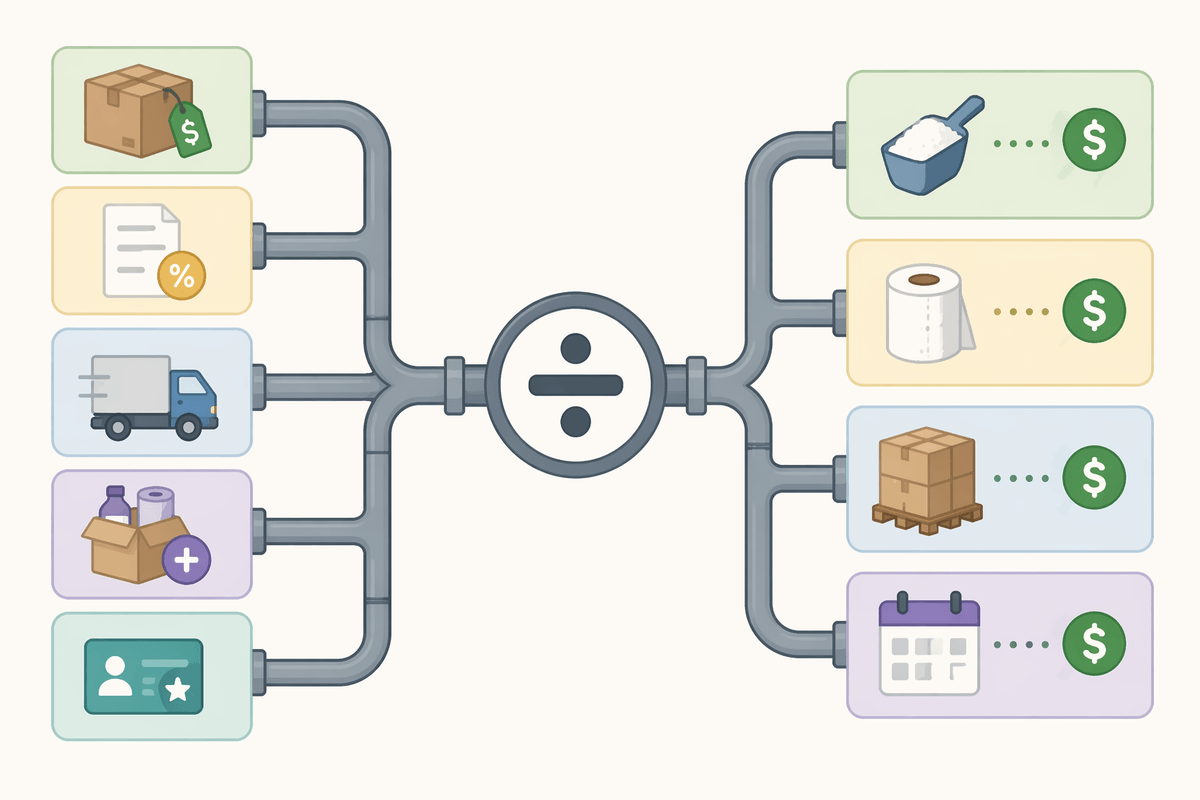
Once the anchor is swapped for your own baseline, the next friction is that promotions rarely talk in comparable numbers. “Buy 2 get 1,” “20% off when you spend $60,” and “$15 off your first subscribe-and-save” all sound different, but they’re all just price per ounce, per roll, per load, or per month—after the conditions.
In the cart, do the translation while the clock is still loud. Take the out-the-door total (item price, tax, shipping, required add-ons, and any membership fee you’re effectively paying) and divide by the usable units. If paper towels are $18 for 12 rolls with $6 shipping, that’s $2.00 a roll, not $1.50. If “3 for 2” forces a size you won’t finish before it goes stale, count only what you’ll realistically use.
Subscriptions need the same treatment. Convert “first month $1” into an average over the months you’ll keep it, and include the hassle cost: missed cancel dates usually turn a promo month into a full-price quarter. When every deal becomes a unit cost, “better” gets quieter—and clearer.
Scarcity tactics distort the timing decision
Even after you’ve done the unit math, the page tries to force a calendar decision: “Only 3 left,” “Limited-time drop,” “Others have this in their cart.” The constraint isn’t just budget—it’s the fear of paying more later. That fear can be real, but it’s often unpriced uncertainty dressed up as urgency.
A quick reality check is to separate “might sell out” from “will cost more.” For household staples, most stock-outs are temporary, not permanent. If you can’t name the next-best substitute and its usual price, you’re buying insurance with your money. That insurance gets expensive when it makes you buy two months early.
Buying early has its own costs: storage space, waste, and the chance a better offer appears while your pantry is already full. When scarcity language shows up, treat it like a cue to set a buy-by date of your own—based on run-out, not a countdown.
Fine print is where discounts quietly disappear
After you’ve set your own buy-by date, the deal usually survives only until the conditions show up. The constraint is that those conditions are timed to be checked late—after you’ve pictured the savings and loaded the cart. “Excludes sale items” wipes out the one thing you planned to buy. “Limit 1” breaks the stock-up math. A minimum spend quietly forces filler items you wouldn’t choose at full price.
Then the costs start reappearing in small places: shipping that’s free only over a threshold, handling fees, “delivery protection,” or a return label that comes out of your refund. If you might return it, the discount isn’t the number on the banner—it’s the net after friction.
For subscriptions, the fine print is the calendar. Intro pricing that jumps in week five, auto-renew terms, or a cancellation window that requires a phone call turns “$1 today” into a higher average than your baseline.
Stacking discounts changes the math dramatically
By the time the fine print stops shrinking, the offer often has a second layer: “extra 15% with code,” “$10 credit with pickup,” “5% back on your store card.” The friction is that each layer feels additive in your head, while the checkout applies them in a specific order. A 20% discount and a 15% coupon rarely become 35% off; the second percentage usually applies after the first cut, and your “stack” ends up smaller than the banner math.
The constraint that matters is what each discount attaches to. Some apply only to pre-tax item totals, some exclude already-discounted items, and some vanish if a coupon drops you under the free-shipping threshold. Even rebates and cash-back can be delayed or capped, which matters if you’re buying now to “save” later.
One reliable move is to price the cart twice: with the stack and without it, then convert both to unit cost. If the stacked version only wins by pennies but pulls you into a larger size, a new payment method, or a subscription start date, the math changed—just not in your favor.
Opportunity costs: money, clutter, and attention
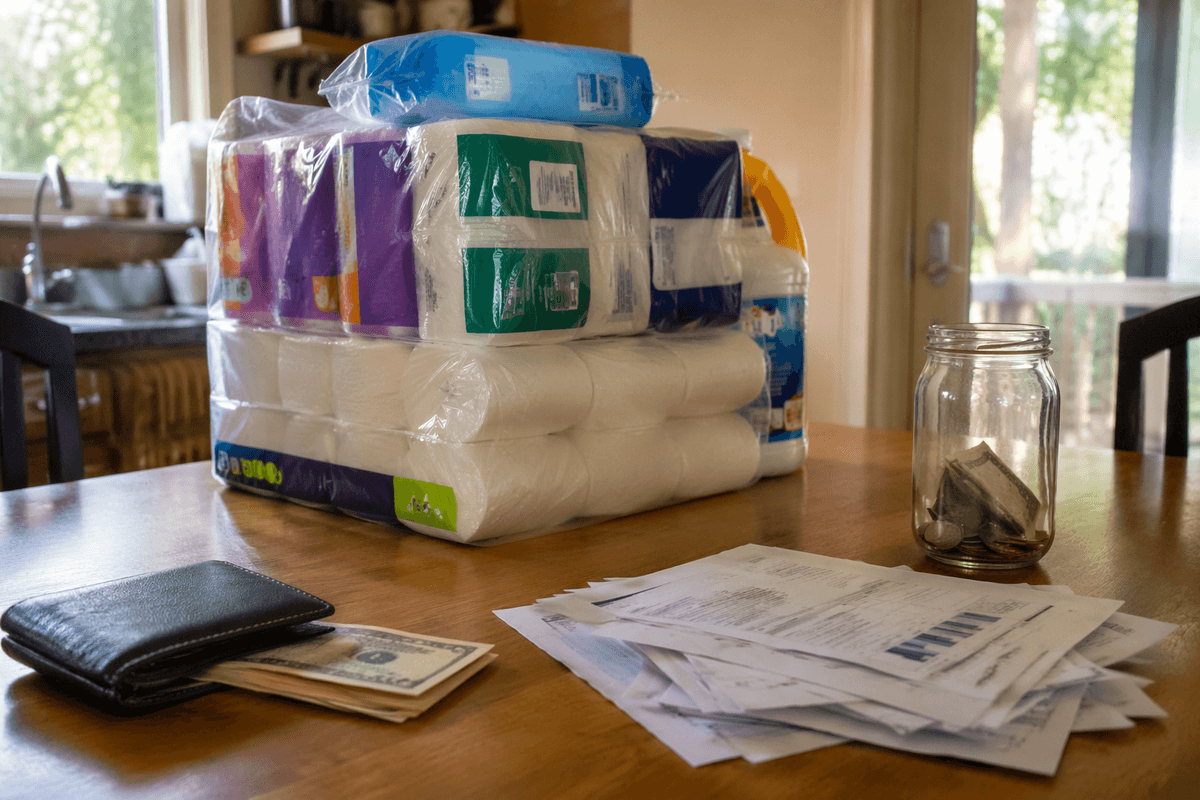
Even when the stacked unit cost wins, the purchase still ties up cash. If you buy three months of detergent today, that’s three months of liquidity you can’t use for a higher-priority bill, a price drop in another category, or simply keeping your buffer intact.
Then there’s carrying cost in physical form: pantry space, duplicates, spoilage, and the “we already have one” friction that leads to accidental re-buys. A cheap extra item can become expensive when it increases waste or forces a larger storage solution.
Attention is the quiet line item. Codes to remember, credits to redeem, cancellation dates to track, and return windows to hit on time all consume bandwidth. If the deal adds management overhead, the savings needs to be large enough to pay for that effort.
A calmer playbook for deals you’ll respect later
After a few rounds of deal math, the goal shifts from “catch every discount” to “make fewer, cleaner decisions.” A calmer playbook starts with one constraint up front: set a maximum stock-up horizon (two to four weeks for most perishables, one to two cycles for staples) and don’t break it unless the unit price is unusually low and cash flow is comfortable.
Then run a short checklist that’s hard to argue with at the cart: (1) What’s my baseline unit price? (2) What’s the all-in unit price today, including shipping, fees, and required add-ons? (3) What new work did this deal create—codes, credits, returns, cancellation dates—and what’s the dollar savings per minute of that work?
If the savings are meaningful, buy once and document it (a note with date, store, unit cost). If not, skip without debating. The point isn’t perfect timing; it’s reducing the number of times urgency gets to set your calendar.