Why neck tension can show up as headaches
It often starts as a small, nagging sensation at the base of the skull—like your head is slightly too heavy for your neck. You might notice you’re turning your whole torso to look sideways instead of just your head, or that one shoulder keeps creeping up while you answer emails. By late afternoon, the “tight neck” feeling can blur into a dull ache that seems to spread behind the eyes or wrap around the temples.
One reason this happens is that the muscles and joints high in the neck share close nerve connections with areas that can refer pain into the head. When those tissues stay in a guarded, working-too-hard state—holding your head forward, bracing your shoulders, or stabilizing you during long drives—they can become more reactive. What feels like a headache “out of nowhere” may be the end of a quiet build-up: reduced neck rotation, pressure along the jawline, and a subtle urge to clench or hold your breath during focused tasks.
Some days you can get away with the same screen time and feel fine; other days, a busy stretch of multitasking makes the system easier to tip. It’s less like a single injury and more like your neck and upper back slowly running out of slack—until the head is where the discomfort finally announces itself.
The posture “fix” that often doesn’t fix pain
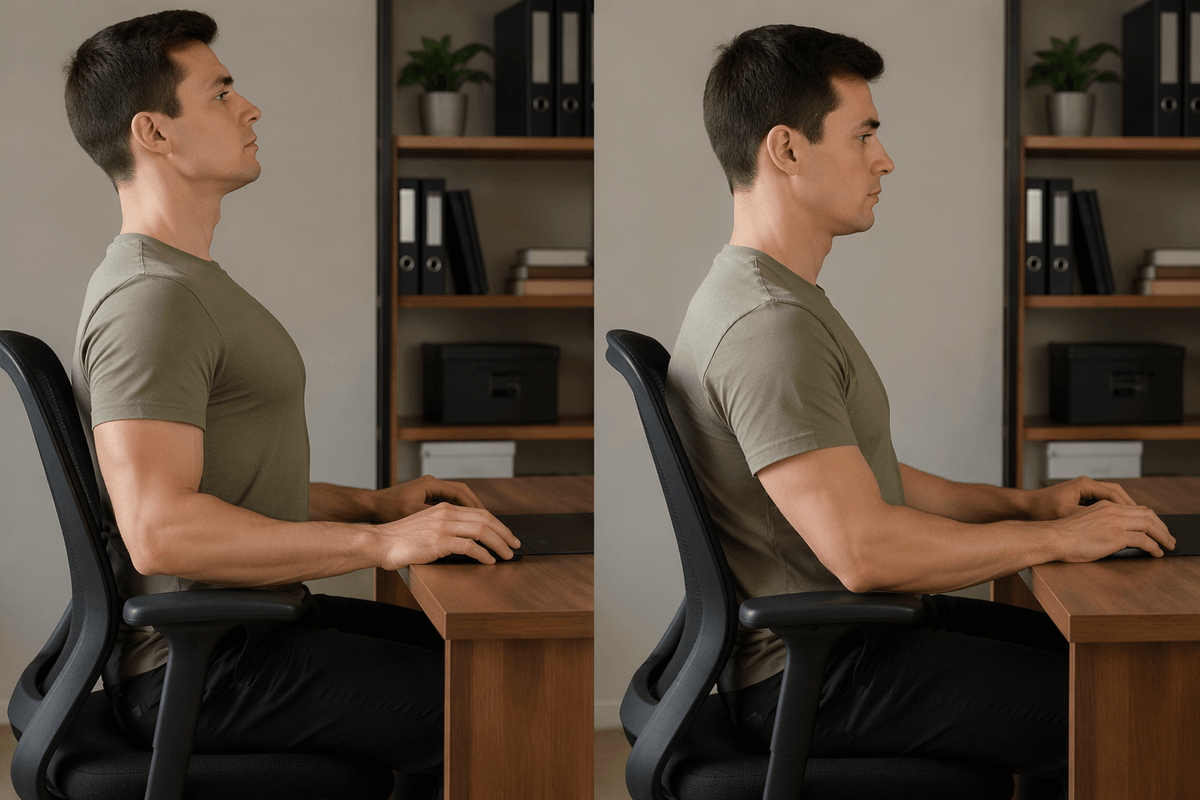
You straighten up, pull your shoulders back, and lift your chin a little—because that’s what “good posture” is supposed to look like. For a minute it feels responsible. Then your neck starts to work harder, your upper traps tighten, and the back of your head feels even more “held.” It’s easy to assume you’re doing it wrong, when the bigger issue is that you’re trying to hold a pose instead of changing the load.
For many people, a posture “fix” becomes a long, quiet muscle contraction: shoulder blades pinned down, ribs flared, chin forced back. That effort can be enough to irritate already tired tissues, especially late in the day when your breathing gets shallower and your jaw creeps toward a clench. The result is confusing—your posture looks better, but the headache pattern doesn’t.
What tends to matter more is whether your neck gets occasional relief: letting the head rest over the spine sometimes, not all the time, and noticing the early warning signs like reduced neck turn or a rising sense of pressure near the jaw.
Small movement breaks that calm the system
You don’t always notice the buildup while it’s happening. It can feel like nothing is “wrong” until you stand up and realize your neck turns a little less easily than it did that morning, or your shoulders feel slightly glued to your ears. That’s often the moment people try to stretch hard or sit bolt-upright—when what the system may need first is a small change in input, not a big correction.
Short movement breaks tend to work because they interrupt long, low-level bracing. When your eyes stay locked on a screen, your breathing often gets quieter, your jaw sets, and the small stabilizers in the upper neck keep firing to hold the head steady. A brief reset—looking far away, letting the shoulders roll, turning the head gently side to side—can give those tissues a reason to stop guarding for a minute.
Some breaks feel helpful, others barely register, especially on stressful days. But over a week, the pattern often shifts: less end-of-day stiffness, fewer “stuck” turns, and a little more slack before a headache tries to settle in.
Screen and phone habits that subtly tighten the neck
It’s often the moment you tilt the laptop screen a little lower, or bring your phone closer so you can read without squinting. Your head follows your eyes. The chin drifts forward, the shoulders round in, and the back of the neck starts doing quiet stabilizing work that doesn’t feel dramatic—until you look up and realize your neck turn is smaller and the base of your skull feels a little “full.”
Screens encourage steadiness: eyes fixed, hands busy, body trying not to move. That steadiness can pull you into a small pattern—forearms hovering, shoulders slightly lifted, breath getting shallow without you noticing. With a phone, the load is sneakier because it’s often one-handed and angled down, so the neck rotates and bends at the same time. It may not hurt in the moment, but it can leave the upper neck and jaw feeling primed, like they’re already bracing before the headache even starts.
You can be “sitting fine” and still be accumulating tiny effort: holding your head still for long reads, peeking down at notifications, or craning forward during video calls. If the pattern repeats late in the day, that’s when people often notice the first signals—pressure near the jaw, a shoulder creeping up, and a neck that doesn’t want to turn all the way.
Jaw, breathing, and stress patterns behind tightness
It can show up in small places first: you notice your teeth touching when they don’t need to, or your tongue pressing hard against the roof of your mouth while you read. Sometimes it’s the opposite—your jaw feels tired at dinner, like it’s been “working” all day. By then, the neck often feels thicker and less willing to rotate, and the base of the skull has that familiar crowded pressure.
Jaw tension and neck tension tend to travel together because they’re both part of a bracing strategy—your body trying to create steadiness during focus, stress, or uncertainty. If you clench even lightly, the muscles around the temples and jaw can stay active, and the upper neck may respond by stiffening to keep the head from moving. It can be subtle enough that you only catch it when you finally yawn or chew and realize how held everything has been.
Breathing can add another quiet layer. During intense screen work or commuting, it’s common to slip into shallow, upper-chest breaths or brief breath-holding without realizing it. That tends to recruit the neck and shoulder area as “helper” breathing muscles, which can make the whole region feel on alert. On busy weeks, the pattern isn’t always pain in the moment—it’s a shorter fuse later, when a normal amount of screen time suddenly ends in a headache.
Stretching and self-massage: helpful or aggravating?

It’s usually right when you stand up from a long stretch of work that the urge hits: grab the side of your neck and pull, dig a thumb into the spot that feels like a knot, “fix it” fast. Sometimes that feels like instant relief. Other times the area feels oddly tender afterward, and the pressure at the base of the skull seems to creep upward—like you stirred up something that was already irritated.
Part of the confusion is that tight can mean two different things. Some tightness is simply stiff tissue that responds well to gentle movement and warmth. But some is protective guarding—muscles staying switched on to keep a sensitive joint or nerve area feeling stable. In that guarded state, strong stretching or aggressive self-massage can act like a louder input than the system wants, especially late in the day when you’ve already been bracing through screens, jaw tension, and shallow breathing.
When stretching helps, it often feels like a gradual “letting go,” with easier neck rotation afterward and less jaw pressure. When it aggravates, the signal is usually sharper or more diffuse: a lingering ache, a headache that ramps up within an hour, or a neck that feels more reactive the next morning. The same technique can land differently depending on how close you already are to your tension threshold.
Sleep, pillows, and wake-up headache confusion
It’s often the first few minutes after you sit up: the neck feels crunchy, one side won’t turn, and there’s a dull pressure that makes you wonder if your pillow “messed you up.” But the confusing part is how normal the night can seem—no dramatic pain, no obvious bad position—yet you still wake with a head that feels heavy and a neck that’s already working.
Sleep doesn’t always reset tension; it can lock it in. If your head is slightly tilted or rotated for hours, the upper neck may stay in a low-level hold, and a guarded jaw can follow—especially if stress carries into sleep. Too high, too flat, or too soft can each create a different problem: one pushes the chin forward, another lets the head drop, and another lets you sink into a twist that feels “fine” until morning.
A new pillow might help for two nights, then the wake-up headache returns, or the same pillow feels different after a long screen-heavy day. Sometimes the better clue isn’t the pillow at all—it’s how stiff your first neck turn is before coffee, and whether the pressure fades as you start moving.
Signals that suggest it’s not “just tension”
Sometimes the clue is how the headache behaves, not how tight your neck feels. If the pain keeps escalating instead of easing once you’re up and moving, or it starts waking you from sleep rather than just showing up after screens, it can feel less like a simple end-of-day buildup and more like something that deserves a closer look.
It’s also worth paying attention when the pattern changes. A headache that arrives suddenly at full intensity, comes with a new kind of dizziness, faintness, confusion, fever, or a stiff neck that feels “locked” rather than just stiff may be outside the usual tension story. Same if you notice new numbness, tingling, weakness, vision changes, slurred speech, or facial droop—signals that aren’t typical of everyday muscle guarding.
Even without dramatic symptoms, the “not just tension” feeling can be quieter: headaches becoming more frequent week to week, needing more medication than before, or showing up after minor exertion instead of long sitting. If that shift persists, it’s often a sign to stop treating it like a posture problem and get it checked by a clinician who can rule out other causes.