Why “comfortable” shoes can still hurt later
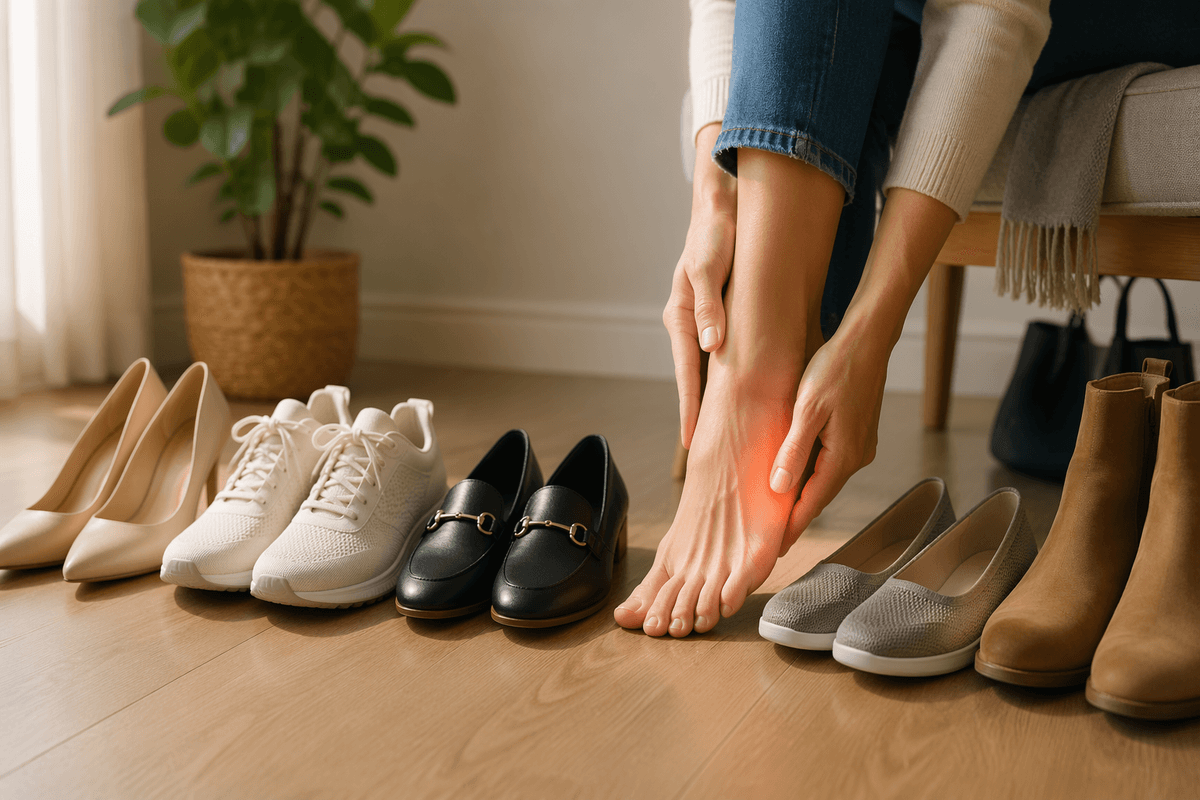
It can start as a small relief: the shoes feel soft, the first few errands feel fine, and you stop thinking about your feet. Then later—standing in line, heading back to the car—you notice a tender spot under the ball of the foot, or a dull ache along the arch that wasn’t there at noon.
That delay is common because “comfortable” often reflects what you feel immediately: cushioning, a smooth lining, a forgiving upper. But if the fit is a touch short, the toe box nudges your toes together, or the heel sits a little higher than you realize, your stride can subtly adjust. You may push off earlier, grip with your toes, or load more on one side without noticing.
Over hours, those small changes can concentrate pressure and friction in the same few places. The shoe may still feel pleasant overall, yet tissues that handle repeated rubbing or compression get less tolerant—especially on long days when swelling and heat make everything tighter.
Fit mechanics that shape pressure and friction
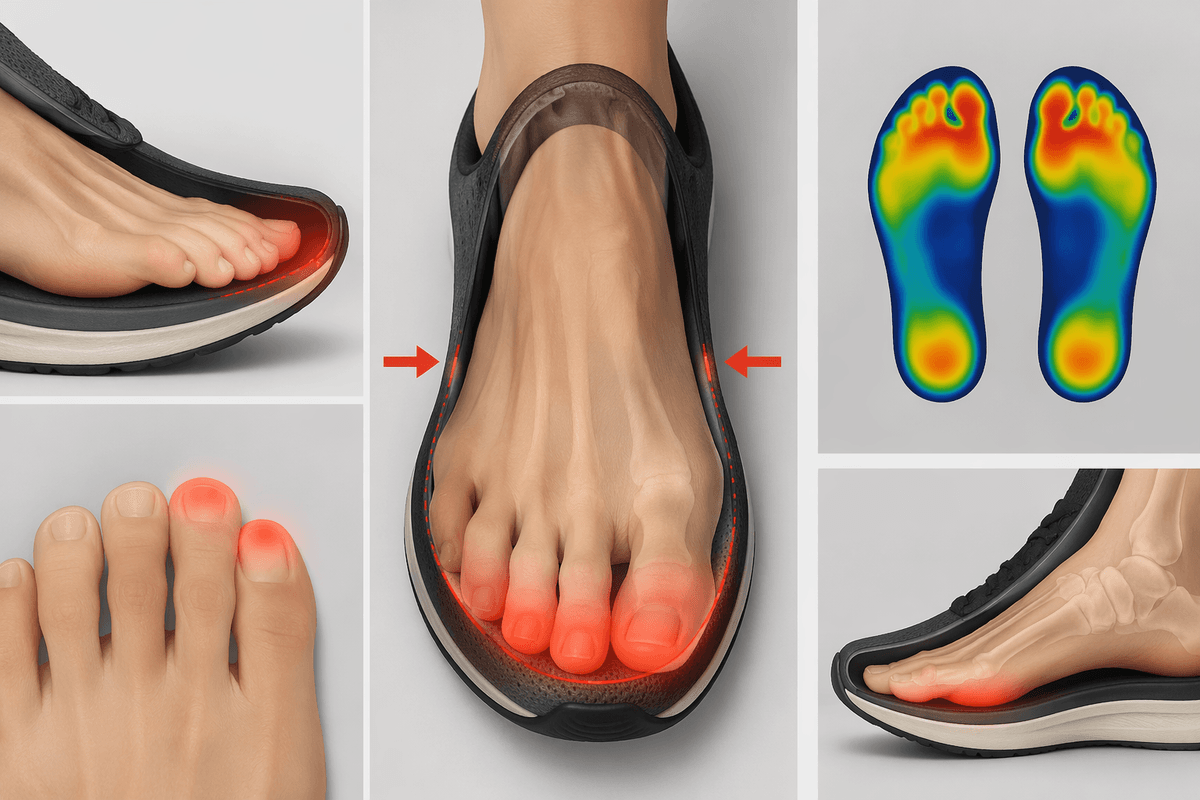
By mid‑afternoon, you might notice the shoe feels “snugger” than it did in the morning, even though nothing about it changed. What often changed is your foot: a little swelling, a little heat, and suddenly the same upper that felt cozy starts pressing in. That’s when a seam that seemed harmless can become the exact line you keep rubbing against, or when the ball of the foot starts feeling oddly bruised.
Small fit mechanics tend to show up as patterns. A toe box that’s slightly short or tapered can encourage toe gripping and earlier push‑off, which concentrates pressure under the forefoot and increases rubbing at the tips or along the side of the big toe. A heel that lifts even a few millimeters with each step can create repeated shear, so irritation shows up at the back of the heel even if the shoe isn’t “too big.” And if the midfoot feels loosely held, your foot may slide and re‑center all day, turning normal walking into thousands of tiny re-adjustments—each one adding friction where the skin and sock keep catching.
It can be confusing because the foot often tries to “solve” the problem quietly: curling toes for grip, shifting weight to the outer edge, shortening stride to avoid slip. Those compensations may keep the shoe feeling stable, but they also move stress to places that don’t like being recruited for stability work hour after hour.
Cushioning and support: comfort versus control trade-offs
Sometimes the giveaway isn’t pain at first—it’s a slight “sinking” feeling when you step down, like the floor is softer than it should be. The shoe may feel luxurious, but later you notice your toes working harder to steady you, or your calves feel oddly tired even though you didn’t walk farther than usual.
That’s the trade-off: cushioning can mute impact, but if it’s very soft or compresses unevenly, it may also blur the foot’s sense of where it is in space. In some situations the body responds by tightening—gripping with the toes, tensing through the arch, or letting the ankle roll a bit more before catching itself. Over hours, that “extra control” effort can shift pressure toward the ball of the foot or the inner edge, creating tender spots that seem to come out of nowhere.
A firmer midsole or a pronounced arch can feel corrective and stable, yet if it doesn’t match your foot shape, the pressure isn’t spread—it’s relocated. Instead of general fatigue, you get a specific hot line under the arch, or soreness just in front of the heel where the shoe is asking your foot to bend somewhere it doesn’t naturally want to.
Heel height and toe shape quietly alter walking patterns
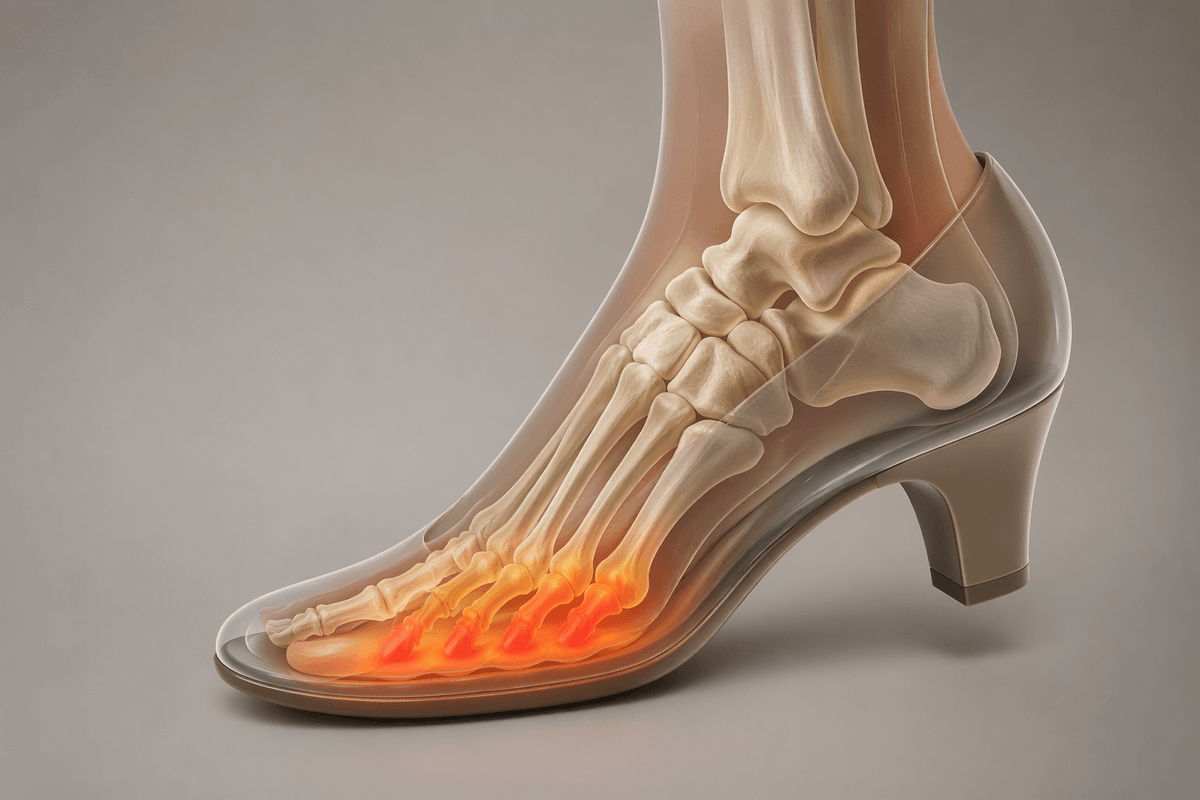
You notice it when you pause at a crosswalk: your weight doesn’t settle evenly. In a slightly higher heel—whether it’s a boot with a lift or a “barely there” wedge—your center of mass shifts forward, and your stride often gets a bit shorter without you choosing it. The calf and the front of the ankle may stay more “on,” and the ball of the foot can take the steadying work that the heel used to share.
Toe shape changes the other end of the step. A tapered toe box can make the big toe drift inward and the smaller toes stack or curl for room. That can subtly alter push-off, so pressure moves toward the second and third metatarsals, or you start rolling off the outer edge to avoid the squeeze.
Even a rounded toe can create a similar loop if the front is stiff or has strong toe-spring: the shoe “pre-bends,” and your toes do less natural spreading. It may feel smooth—right up until the same tender spots show up at the same time each day.
Materials, heat, and moisture drive everyday discomfort loops
It’s often the moment you slip the shoes off and your socks feel slightly damp, even if the day didn’t seem sweaty. The inside of the shoe can hold warmth and humidity, and that changes how your skin behaves. What felt “buttery” in the morning can start to feel grabby by late afternoon, as the foot swells a little and the lining doesn’t slide the same way anymore.
Moisture also makes friction less predictable. In some shoes it increases sticking, so instead of the foot gliding you get tiny tugs at the ball, the side of the big toe, or the rim of the heel cup. In others it acts like a thin lubricant at first, then turns into a hot spot once the sock bunches or the insole shifts. The shoe itself hasn’t suddenly gotten worse—your “interface” with it has changed.
Materials play into that loop. A stiff upper can trap heat but keep shape; a softer knit can breathe yet stretch and let the foot drift, adding rubbing where you don’t expect it. When the pattern repeats—same tender spot, same time of day—it’s often heat, swelling, and surface friction stacking up rather than a single dramatic fit mistake.
How routines and surfaces change what feels tolerable
You feel it most when your day changes without warning: a “normal” pair of shoes is fine on the kitchen floor, then suddenly you’re standing on a hard lobby tile, waiting for an elevator, and the pressure under the ball of your foot feels sharper than it did yesterday.
Surfaces quietly decide how much your shoe has to do. Carpet and rubber give back a little, so softer cushioning can seem forgiving. Concrete and stone don’t, so the same midsole may bottom out sooner and turn impact into a steady, repeated load in the same few spots. Add long standing—less rolling through the step, more static pressure—and areas like the forefoot, heel rim, or a “too present” arch support can start announcing themselves.
Routines amplify small mismatches because they repeat. Taking stairs in a snug toe box can increase toe gripping; stop‑and‑go errands can mean more braking and push‑off, which stresses the front of the shoe; a long commute can leave feet slightly swollen before you even start walking. Nothing feels “wrong” until the surface and the schedule line up the same way again.
Common comfort misreads and practical ways to recalibrate
Sometimes the first clue is how relieved your feet feel the moment you switch shoes—until you realize you’re only changing the kind of pressure, not reducing it. A very soft pair can feel like a rescue, but if your toes have been gripping for stability all day, that “ahh” can mask how much work your feet were doing to keep you centered.
A common misread is blaming “flat feet” or “weak arches” when the soreness is really a timing-and-location pattern: tenderness under the second and third toes often lines up with a tapered or stiff toe box that changes push-off; a burning rim at the heel can match tiny heel lift and repeated shear; a sharp stripe in the arch may show up when support hits one spot instead of spreading load. Comfort also gets misjudged by morning fit—many shoes only feel “perfect” before heat and swelling arrive.
Recalibrating doesn’t have to be dramatic. Paying attention to when the discomfort starts, which sock or surface makes it worse, and where the outsole is wearing unevenly can turn a vague “my feet hate these” into a more useful read: sliding, squeezing, sinking, or being held too firmly in the wrong place. The pattern is often clearer than the first impression.