Why Iceland works for a father-sons trip
Our first real decision happened before we even left the airport parking lot: do we chase “everything” in five days, or build a plan that still works when the wind turns mean and the daylight mood swings? Iceland is unusually good for a father-sons trip because the payoff-to-effort ratio is high—waterfalls, black sand, glaciers—often with short walks. The limitation is that it tricks you into overbooking days because the map looks small.
It also matches how kids actually travel. You can alternate big, loud stops (Skógafoss, geysers, iceberg lagoons) with “reset” time—hot pools, quick diners, a long playlist in the car—without feeling like you’re wasting the day. The catch is that the same flexibility makes it tempting to add detours, and those are exactly what push you into arriving at lodging late.
Finally, Iceland rewards clear choices. Self-driving gives you control over pacing and snack breaks, but you absorb weather risk and fatigue; tours reduce stress, but you inherit crowds and rigid timing. For most families, a simple loop with one “spare” buffer hour per day is what keeps everyone happy.
Day 1 Reykjavík: Must Hallgrímskirkja; Opt pools; Skip museums
We landed with that familiar Day 1 question: do you push through the jet lag and “see the city,” or do you keep it simple so tomorrow’s driving doesn’t feel like punishment? We chose one anchor—Hallgrímskirkja—because it’s visually dramatic, easy to reach, and you can be in and out without committing to a whole afternoon. The elevator line to the tower can bottleneck when groups arrive, so we went earlier than we felt ready; it worked, but it also meant accepting that breakfast would be a grab-and-go situation rather than a sit-down win.
From there, Reykjavík is best treated like a pacing tool, not a checklist. With two sons, the pools were the “buy-in” activity: enough novelty to feel like Iceland, but not so structured that you’re watching the clock. The constraint is energy—if you do a long soak late, it can steal momentum for an evening walk (and teens will happily turn “quick pool stop” into a two-hour mission). Museums were the easiest skip: not because they aren’t good, but because indoor time is more valuable later as weather backup when the ring-road days get squeezed.
Day 2 Golden Circle: Must Þingvellir; Opt Geysir; Skip extra stops
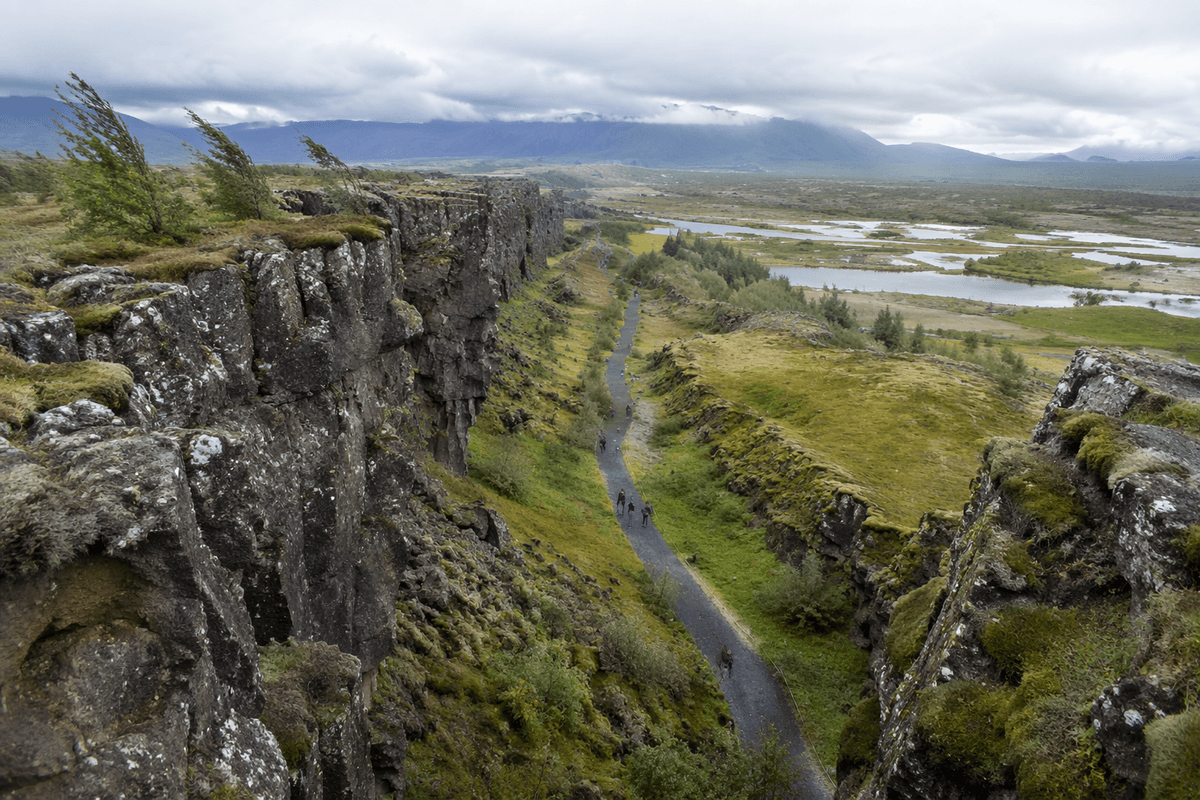
On Golden Circle morning, the first friction point was mental: it’s marketed like a “quick loop,” so you assume you can stack stops. In reality, the time leaks come from parking, bathrooms, and the constant “wait, let’s just look over there” moments—especially with kids. We treated Þingvellir as the one non-negotiable because it feels different than everything else: not just scenery, but scale you can walk into. The main paths are straightforward, but wind can make it feel colder than the forecast, and that’s when shorter loops beat ambitious hikes.
Geysir was optional for us, and that surprised me—on paper it’s iconic, but in practice it’s a stop you either love for the pure spectacle or tolerate as a crowded boardwalk with a gift shop gravity well. We went, stayed just long enough to catch a couple eruptions, and left before the boys’ attention dipped. What we skipped on purpose were the extra “small” stops people layer in between; they’re rarely bad, but they turn the day into a series of exits and re-entries that add fatigue without adding a new kind of experience.
If you’re self-driving, the win here is control: you can front-load Þingvellir early, keep snacks in the car, and give yourselves permission to bail on Geysir if weather or moods slide. A tour smooths logistics, but you’re locked into everyone else’s pace—and that’s where Golden Circle can start feeling longer than it is.
Day 3 South Coast: Must Skógafoss; Opt Sólheimajökull; Skip shopping
Day 3 started with a small but real calculation: do you chase the “full South Coast” and risk turning the car into a second classroom, or do you pick one big hit and protect everyone’s mood? We treated Skógafoss as the must because it delivers instantly—no long approach, no “trust me, it gets better” ramp-up. The trade is crowds and spray: in stronger wind, the mist turns sideways and you’ll either commit to getting soaked (kids usually vote yes) or you’ll stand farther back and miss the full force. If you have the energy, the staircase up the side is worth it, but only if you set a hard turnaround point before it becomes a sweaty competition.
Sólheimajökull worked best as the optional “cool activity” because it feels like you’re doing something, not just looking. The constraint is time: even a “quick” glacier stop has hidden minutes—gearing up, walking over uneven ground, waiting for a gap in photos. We chose it when the weather held; on a gray, wet day, it’s still impressive, but comfort drops fast if gloves and waterproof layers aren’t dialed.
What we skipped were the roadside shops and long browsing stops. They’re not bad, they’re just sticky—ten minutes becomes forty, and then you’re arriving at lodging hungry and late, which is when the next morning’s plan starts wobbling.
Day 4 Vatnajökull: Must Jökulsárlón; Opt Diamond Beach; Skip long hikes
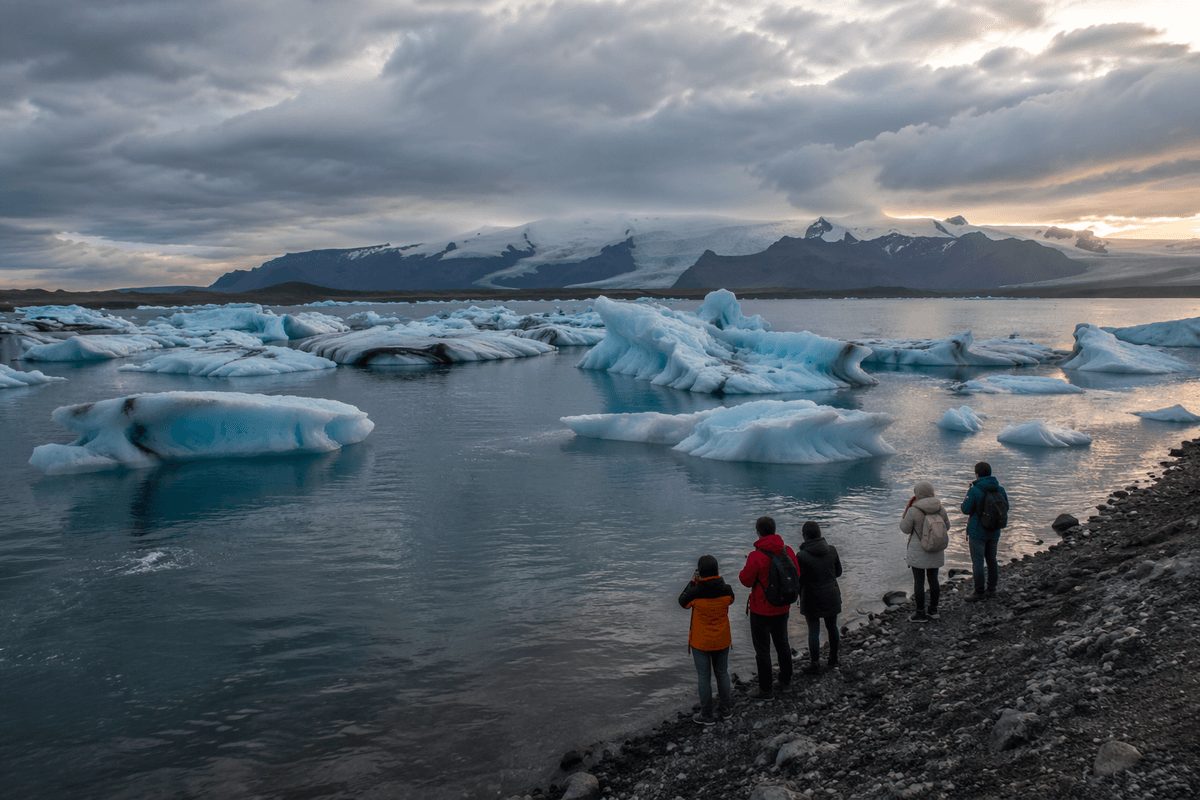
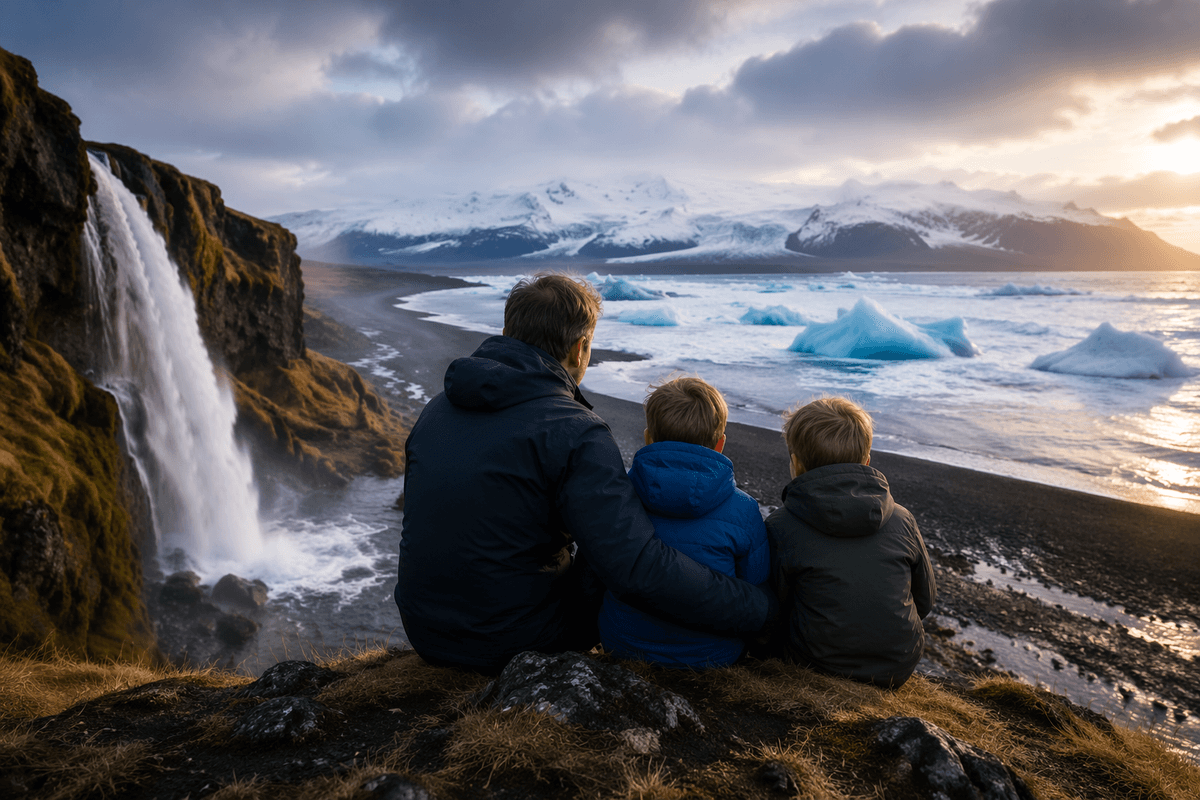
By Day 4, the question wasn’t “what’s worth seeing?”—it was whether we could get to Vatnajökull-country without turning the drive into a test of everyone’s patience. Jökulsárlón was the clear must because it’s not subtle: icebergs, shifting light, and that constant low crackle when pieces roll. What didn’t work as well was assuming we’d casually “pop in” and leave; parking, bathrooms, and a slow lap along the shoreline can easily stretch longer than planned, especially when the boys start tracking which bergs are bluest and which are flipping.
Diamond Beach is the easiest optional add-on because it’s basically a bonus round across the road, but it’s also where conditions decide for you. When wind is up, the sand stings and photos become a quick in-and-out; when it’s calm, you’ll linger. We skipped long hikes here on purpose—not because they aren’t incredible, but because uneven terrain plus accumulated fatigue is when ankles roll and moods dip. If we had extra time, we’d spend it on a warmer snack stop and an earlier check-in, not an ambitious trail.
Day 5 Snæfellsnes: Must Kirkjufell; Opt Arnarstapi; Skip late detours
Day 5 was the day we almost overreached: Snæfellsnes looks like a neat “one peninsula” plan, but it’s still real driving—especially if you’re starting from Reykjavík and trying to return by dinner. We aimed straight for Kirkjufell as the must because it gives you that clean, iconic payoff with minimal effort. What worked was treating it like a timed stop, not a hangout: quick loop, a few angles, then back in the car before the weather (or the boys) turned the photo session into a negotiation. Wind is the quiet spoiler here; it’s manageable, but it can make even a short walk feel harsher than it should.
Arnarstapi was our optional “let them roam” stop. The cliffs and rock arches feel more like an experience than a viewpoint, and it’s a good place to burn off car energy without committing to a big hike. The constraint is that it’s easy to keep extending the walk “just to the next bend,” and that’s how your return drive starts sliding later than you planned.
What we skipped were the late-day detours around the far side of the peninsula. They might be beautiful, but they’re also where you risk ending the trip with tired, snack-depleted passengers and a longer-than-expected drive back—exactly when you want things to run clean.
What we’d repeat—and what we’d simplify next time
The repeat list is short and confidence-building: one anchor each day (Hallgrímskirkja, Þingvellir, Skógafoss, Jökulsárlón, Kirkjufell) plus a pool reset when energy started fraying. That structure worked because the boys could “win” the day early, and we weren’t bargaining with weather at sunset.
What we’d simplify is the constant temptation to add “one more” stop. Every extra parking lot cost us more than the stop itself—bathrooms, snacks, wet layers, and the slow creep of late check-ins. Next time, I’d plan one optional add-on per day and treat anything else as a bonus, not a promise.
If you’re deciding between routes, choose the one that keeps you arriving earlier, not later; the scenery is still huge, but your margin for bad wind and tired kids gets bigger.