Mumbai beyond the highlights
I stood on the edge of Colaba Causeway with a pocket list of “must-sees” and the first real Mumbai question: do I chase icons in the midday glare, or save my energy for the city that actually runs on routine? South Mumbai’s classics (Gateway, Marine Drive) are satisfying, but they’re also the easiest places to get stuck in slow-moving crowds and selfie traffic—especially if you go when the sun is at its meanest.
What worked better was using the highlights as “anchors,” then stepping sideways into everyday streets: walk from Fort’s old offices and bookshops toward Kala Ghoda, then let the lanes pull you toward quieter cafés, small temples, and working neighborhoods where people are commuting, not touring. You’ll trade postcard views for a more lived-in feel—and you’ll need to be okay with noise, uneven sidewalks, and the fact that distances that look short on a map can feel long in the heat.
If you only get one timing choice right: do the outdoor, walk-heavy bits early morning or late evening, and keep midday for a museum, a long lunch, or an air-conditioned reset.
Pick your local base by neighborhood vibe
The first time I tried to “optimize” Mumbai by hotel price alone, I learned quickly that the real cost is time: a cheap room that’s an hour away in traffic can quietly erase your mornings. For a 3–4 day trip, choosing a base you actually like walking around matters as much as the bed—because you’ll end up doing small errands (water, snacks, cash) every day, often in sticky heat.
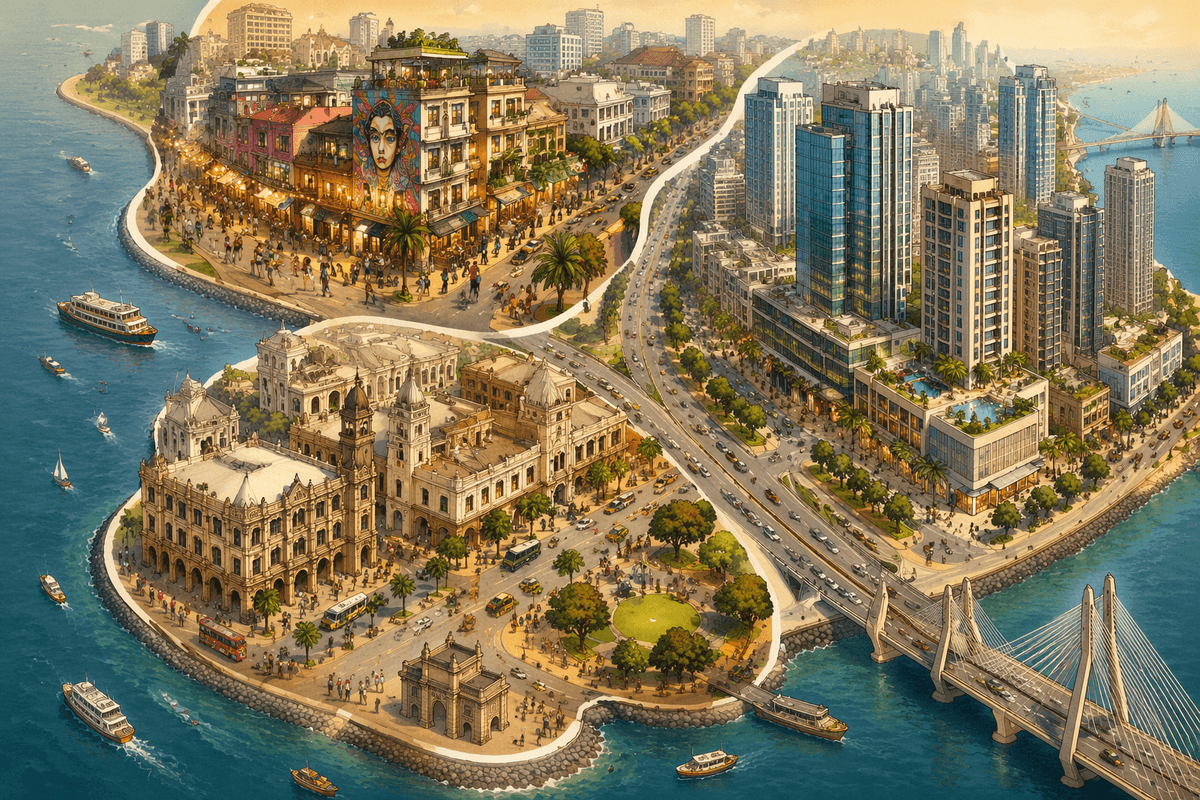
If you want maximum ease, stay in South Mumbai around Fort/Colaba: it’s walkable by Mumbai standards, packed with cafés and sights, and you can bail into AC whenever you hit a wall. The friction point is that it can feel touristed and pricier, and weekend evenings around Marine Drive/Colaba can be shoulder-to-shoulder. Bandra feels more “lived-in” and stylish (great food, good evening energy), but the commute to the southern sights can be a grind—fine if you’re okay spending more on cabs and planning around traffic.
Lower Parel/Worli is the middle path for mid-range budgets: modern hotels, solid dining, and quicker hops north or south, but less of that old-city street texture right outside your door. Wherever you land, ask for a room away from the main road—Mumbai noise doesn’t really “turn off,” and sleep is the difference between enjoying the local rhythm and just enduring it.
Eat like Mumbaikars: stalls, cafés, thalis
The first real food decision hit me around 1 p.m., when the heat makes you over-order: do I trust a busy street stall, or retreat to a café where I can sit, hydrate, and stop sweating? What worked was treating Mumbai food like a sequence, not a single “best meal.” I’d start with something low-risk and high-comfort (a café breakfast in Fort or a clean bakery counter), then graduate to street snacks once I’d seen how a place handled crowds, water, and turnover. If a stall is quiet at peak time, skip it—Mumbai’s safest cue is usually how fast the line moves.
For street eating, I had the best luck with items that are cooked-to-order and served hot: vada pav, pav bhaji, and dosas in particular. The constraint is speed: you’ll eat standing, you’ll be jostled, and during rushy hours the “one quick bite” can turn into a 20-minute shuffle behind office crowds. Carry tissues and don’t plan an immediate cab ride afterward—some snacks are messy in a way that’s charming only if you’re not stuck in traffic with butter on your hands.
When you need a reliable reset, go for a thali at lunchtime—one bill, one table, and you’re fed properly without decision fatigue. It’s not the cheapest way to eat every day, but it buys you time and stomach stability, especially if you’re doing long walks later. If you’re sensitive to spice, ask early (not mid-meal) and accept that “mild” is still Mumbai-mild.
Move like a local: trains, taxis, walking
The moment I stopped pretending I could “just cab everywhere” was when a 20-minute map estimate turned into nearly an hour of inching forward, horns and all. In South/Central Mumbai, traffic isn’t a surprise—it’s the default—so your real choice is whether you’re paying with money (taxis) or with intensity (trains). If you’re curious and not carrying shopping bags, taking the local train once can be the most Mumbai thing you do, but it’s only enjoyable if you dodge peak commuter crush.
For first-timers, aim for late morning or mid-afternoon rides (think after office rush, before school/early evening swell). Buy a ticket at the station, keep your phone and wallet zipped, and commit to one simple route rather than a multi-transfer puzzle. The “Ladies” compartment is a helpful option if it applies to you; otherwise, don’t force it when a coach is already packed—waiting for the next train is the calmer move, even if it costs you 10 minutes.
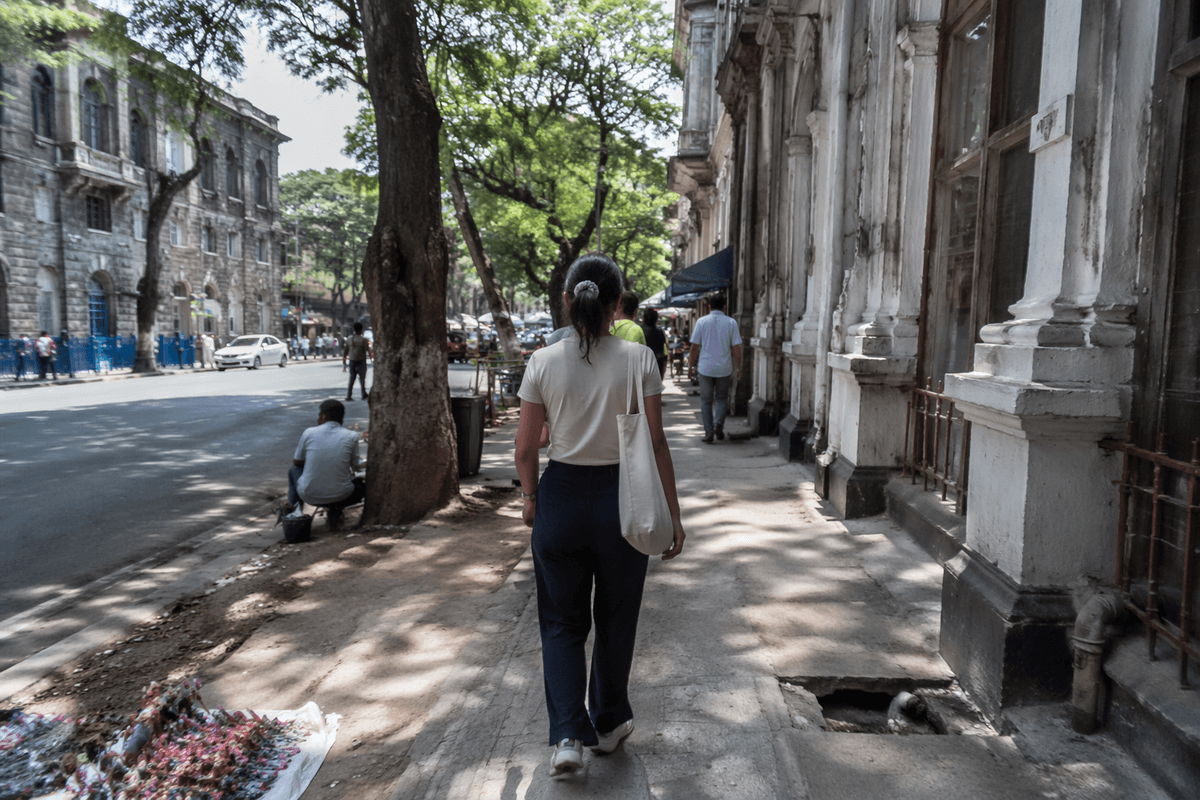
When you want reliability, default to app cabs for longer hops and black-and-yellow taxis for shorter ones, but expect pickup friction in busy areas—sometimes walking two blocks to a quieter street saves more time than arguing with an app. And don’t underestimate walking in the old-city core: Fort-to-Kala Ghoda is rewarding on foot, yet sidewalks can vanish without warning, so closed-toe shoes and a slower pace beat trying to “power through” in the heat.
Daily rhythms: markets, seaside, festivals, nightlife
I learned Mumbai’s daily rhythm the hard way: I walked into Crawford Market mid-morning thinking I’d “browse,” and instead got swept into a fast-moving corridor of handcarts, shouting vendors, and zero spare sidewalk. If you want markets to feel energizing rather than exhausting, go early—when it’s cooler, the produce looks better, and you can actually pause without blocking someone’s entire route. Late morning into afternoon is doable, but only if you treat it like a quick mission (spices, fruit, a photo, out) and not a long wander.
By late day, the city shifts toward the sea. Marine Drive at sunset is genuinely special, but it’s also when everyone else has the same idea—families, couples, cricket games, and a lot of slow walking. If you’re crowd-averse, go a little earlier and stay through dusk, or choose a smaller shoreline stretch (Girgaum Chowpatty can be fun for snacks, but it’s noisier and messier). The small win is bringing your own water and sitting for 20 minutes; the moment you stop trying to “do” something, Mumbai starts to feel less intense.
Festivals and nightlife are where timing and comfort level matter most. If you stumble into a procession or street celebration, expect roads to close unpredictably and rides to spike or stall—sometimes the smartest move is to commit to walking back toward your base rather than hunting for a car in the chaos. For nights out, I preferred earlier dinners and one drink somewhere in Lower Parel or Bandra’s restaurant-bars, then a straightforward ride home; pushing late can be fun, but it’s when fatigue, heat, and logistics stack up fast.
Make it yours, without trying too hard
On my last morning, I had the classic impulse to cram in “one more” neighborhood—then I looked at the clock, the humidity, and my own patience, and chose a smaller win instead: a repeat breakfast near where I was staying, a short walk, and a clean exit from the city’s momentum. Mumbai rewards repetition more than checklisting; going back to the same café or the same stretch of street means you stop navigating and start noticing.
If you’re trying to keep things feeling local without getting scorched by logistics, pick one “anchor” each day (a market, a museum, a seaside hour), then give yourself a buffer block to wander or sit. The constraint is that Mumbai’s scale punishes overconfidence—two “quick” stops can collapse into a sweaty taxi hunt or a slow train platform wait. A simple rule that worked: when you feel your energy dip, spend money for comfort (AC cab, thali, a quiet bar) before you spend it on distance.