Spotting lice versus dandruff and product buildup
The first time you part your child’s hair under a bright bathroom light, it’s easy to feel sure you’ve found “something”—until it disappears when you rub the strand between your fingers. That’s the common tell with dandruff flakes and styling residue: they tend to slide, crumble, or brush away. Nits are different. They can look like tiny tan-to-white dots, but they usually feel stuck in place, almost like they’re glued to one side of the hair shaft.
Location helps when your eyes get tired. Dandruff and product buildup scatter wherever hair is thick or products sit, while nits most often show up close to the scalp where it’s warm—especially behind the ears and at the nape of the neck. If you find several “specks” all lined up on individual hairs in those zones and they don’t flick off, that pattern is more suspicious than one random flake on top layers.
Live lice can be even harder because they move quickly and avoid light. People often mistake a bit of lint or a scab for a bug, or they miss lice entirely because the scalp looks normal. When you’re unsure, it helps to treat “does it move?” and “does it slide?” as your two quick reality checks before assuming the worst.
Why itching can mislead your first assumptions
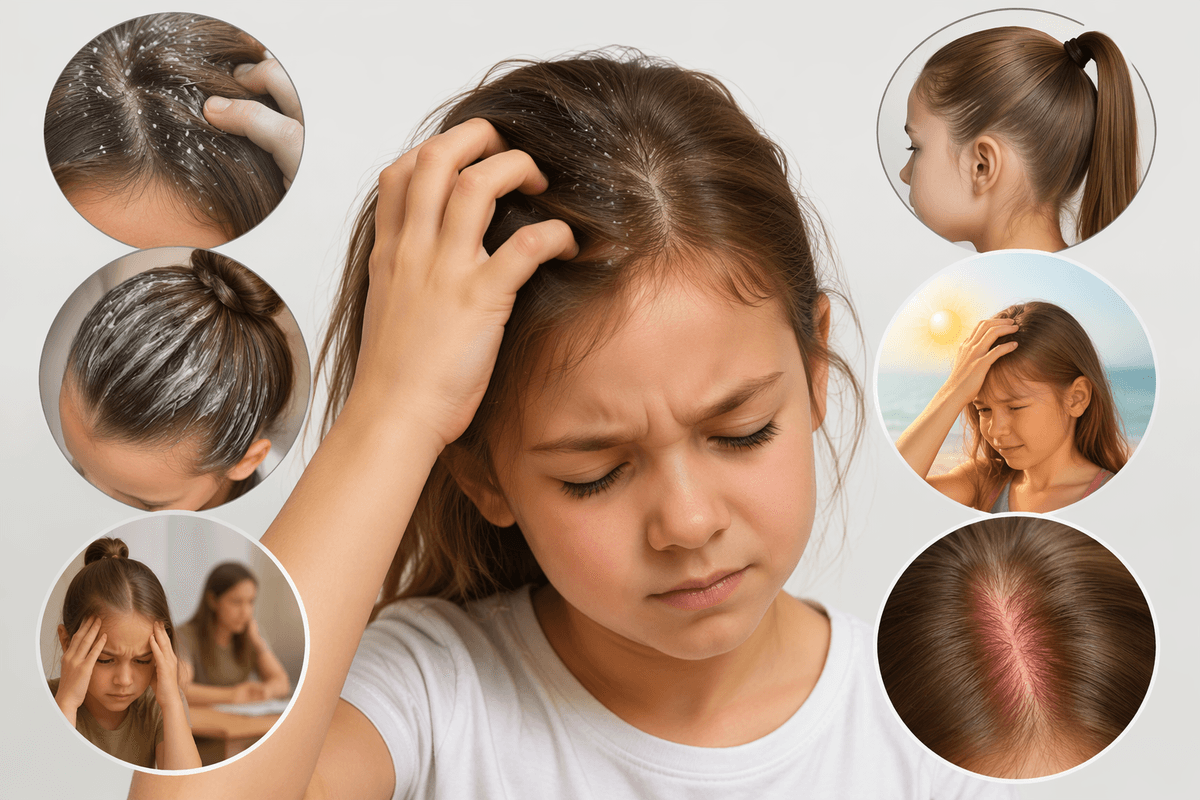
Sometimes the first thing you notice isn’t anything you can see—it’s the scratching during homework, or the way a child keeps tilting their head against the couch seam. That’s when families start mentally replaying the last sleepover or the classroom “lice note,” and the itch begins to feel like proof.
But itching is a noisy signal. A dry scalp after frequent shampooing, a new gel or detangler, tight ponytails, or even a little sun can make the scalp feel prickly in the same spots you’d check for lice. Stress can add to it too; once a kid hears “lice,” normal tickles suddenly get noticed and scratched.
With lice, the itch often lags behind the actual problem—especially early on—because it’s partly a sensitivity response. So a very itchy scalp can still turn up nothing, and a calm-looking scalp can still hide nits close to the skin.
A reliable home check using light and conditioner
The moment that helps most is when the hair is wet and heavy and the “sparkly” bits stop floating away. A bright, direct light (a lamp you can angle, not just overhead) makes a difference, but the real change is slip: conditioner slows everything down. Dry hair lets lice dart and lets flakes bounce; conditioned hair makes strands lie flat so you can see what’s actually attached versus what’s just sitting there.
Work in small sections, starting where lice and nits most often hide—behind the ears and at the nape. Smooth in enough conditioner that the comb doesn’t snag (tugging makes kids squirm, and rushed checks miss the closest-to-scalp area). Then use a fine-tooth lice comb from the scalp outward, wiping the comb on a white paper towel or tissue after each pass. Under the light, lint and dandruff usually look irregular and brushy; nits tend to look oval and consistent, and they stay on the same side of a hair.
If you think you see movement, pause and trap it on the towel rather than chasing it across the head. It’s common to feel unsure the first time—your eyes get tired, and conditioner can make tiny specks look bigger—so the goal is a calm, repeatable check that you can do the same way each time.
Interpreting what you find without overreacting
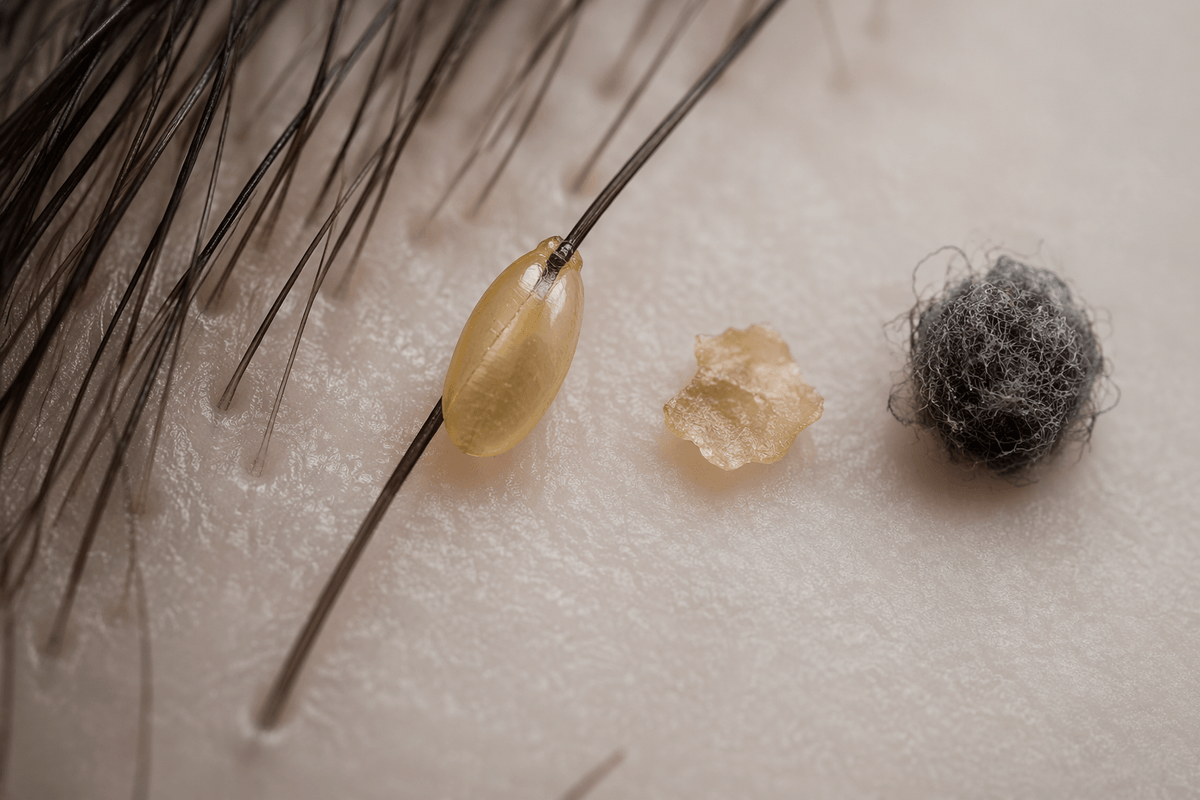
It’s usually right after you wipe the comb on the paper towel that your confidence wobbles: a few pale dots, one darker smear, and the question of whether you’re seeing “proof” or just normal scalp debris. Conditioner can clump lint into convincing little pellets, and a tiny scab can look dramatic under a bright light. That’s why one suspicious speck isn’t the same as a clear pattern.
What tends to matter more is consistency—oval nits that won’t slide, showing up close to the scalp in the same zones (behind the ears, nape), or a live, fast-moving insect caught on the towel. If you find only a couple stuck dots farther down the hair shaft, it may be older and not a sign of active spread right now. Even a careful check can miss newly hatched lice, so uncertainty is normal.
Instead of escalating after a single pass, many families do better treating the first check as a baseline. Repeat the same conditioned comb-out on another day, in the same light, and compare what shows up—more stuck ovals near the scalp is a different story than the same random fluff in new places.
How lice spread in real-life close contact
The call usually comes after something ordinary: your child drapes their head against a cousin’s shoulder during a movie, or two kids press foreheads together to look at a tablet. That kind of head-to-head closeness is where lice spread most easily—not from across the room, but in the small, quiet moments where hair touches hair long enough for a louse to crawl over.
What surprises many families is how “low drama” the early signs can be. A few nits close to the scalp can sit behind an ear for days while everyone assumes it’s just dry skin, and a quick look at the top of the head misses the warm zones lice prefer. Because eggs hatch over time, one good check can still be followed by a confusing week where a child seems fine, then suddenly you spot tiny new movement near the scalp.
Re-spread often comes from routines, not neglect: siblings leaning together in the car, shared brushes in a bathroom cup, hats swapped at recess, a hoodie hood pulled over wet hair, or bedding that gets mixed during sleepovers. When those contacts keep repeating, it can feel like “we got rid of it and it came back,” when it may simply have been cycling through the same close-contact pathways.
Prevention habits that reduce spread without extremes
You notice it in the little piles: a brush with everyone’s hair in it, three hoodies on one hook, a tangle of headphones on the couch. That’s where prevention usually succeeds or fails—not because a home is “dirty,” but because kids naturally stack their stuff and their heads together. If head-to-head contact is the main highway, shared hair gear is the side road that keeps traffic moving.
The habits that tend to help most are the boring, repeatable ones: each child gets their own brush and comb, hair ties stay with the backpack they came in, and hats/helmets don’t get traded “just for a second.” Long hair pulled back for school can cut down on casual hair-to-hair contact, even though it doesn’t make anyone immune. Bedding and favorite stuffed animals are trickier in real life—switching everything at once is a lot of work—so many families focus first on keeping pillows and hair accessories from migrating between siblings.
Because eggs can hatch later, prevention isn’t a one-night reset; it’s a short stretch of consistent checks and consistent boundaries, even when everyone feels tired of thinking about it.
When prevention efforts create irritation or confusion
It often starts with a different kind of itching: the scalp feels “stingy” right after you’ve doubled down on prevention. Extra washing, more tea tree–smelling products, tighter ponytails to keep hair contained, even repeated combing can leave the skin a little rubbed and reactive. Then the scratching ramps up, and it’s easy to assume that means lice are “getting worse,” even when what’s really changing is irritation.
There’s also the confusion of residue. Heavy conditioners, spray detanglers, and dry shampoo can dry into tiny beads that cling near the scalp and look convincing in bright light—especially at the nape where sweat and product collect. When you check too quickly, those specks feel like a setback, and families end up chasing every dot instead of looking for the more reliable pattern: stuck ovals close to the scalp in the usual zones, or actual movement on the towel.
If the household gets stuck in a loop, it’s usually because the prevention becomes inconsistent where it matters most—one shared brush “just this once,” a sleepover pillow mixed back into the pile—while the scalp gets the full force of repeated washing and combing. That combination can make the head feel worse even as the real pathways of re-spread get quieter and harder to notice.