Northern Ireland: myths, headlines, and the real place
The first real decision usually hits before you’ve even booked a bed: do you plan this like a tight checklist (Belfast one day, Giant’s Causeway the next, Derry after that), or do you accept that Northern Ireland rewards slower days and shorter hops? The “headlines” version makes it feel heavy and complicated; the on-the-ground version is friendlier, but it still asks you to pace yourself so you’re not living out of the car.
If you’ve got 7–10 days, you can absolutely see the big names—but trying to “collect” Belfast, the Causeway Coast, Derry, the Mournes, and inland counties in one sweep is where trips start to fray. Distances look small on a map, yet single-lane roads, slow coastal stretches, and weather that flips in an hour can quietly steal your best light for viewpoints and walks.
A car gives you the most flexibility for cliffs, glens, and villages, but it also adds decision fatigue (parking, narrow roads, where to stop). If driving feels like a mental load, build in fewer bases and more two-night stays—you’ll lose some spontaneity, but you’ll gain calmer mornings and a trip that feels like a place, not a route.
Choose your base: Belfast, Derry, or coastal towns
I always notice the “base” question turning real when you’re staring at a booking page thinking, Do I want one hotel and day trips, or a couple of moves? For a first Northern Ireland trip, Belfast is the easiest default: it’s well-connected, you can arrive without a car, and it keeps decisions simple. The catch is you’ll pay more for parking and you’ll burn time backtracking—Belfast to the Causeway Coast is often 1–1.5 hours each way, so late starts can mean you reach the cliffs after the best light has already shifted.
Derry/Londonderry works better than people expect if your priorities lean coastal drives and history with fewer crowds. Staying there puts you roughly an hour from key Causeway Coast stops and makes the Inishowen-style “northwest drift” feel natural, not forced. The limitation is that it’s less convenient for the Mournes or Armagh (think 2+ hours when traffic and slower roads stack up), so it’s a smarter base if you’re committing to the north and west rather than trying to “cover” everything.
Coastal towns (Portrush/Portstewart, Ballycastle, Cushendall) are the scenic choice—and the weather-dependent one. When the forecast behaves, waking up by the sea is unbeatable; when it doesn’t, you can feel stranded with fewer evening options and tighter dining choices. I’d only base on the coast if you’re comfortable driving narrow roads in changeable conditions, or you’re giving yourself two nights so a bad-weather day doesn’t wipe out the whole segment.
Causeway Coast essentials: cliffs, castles, sea roads
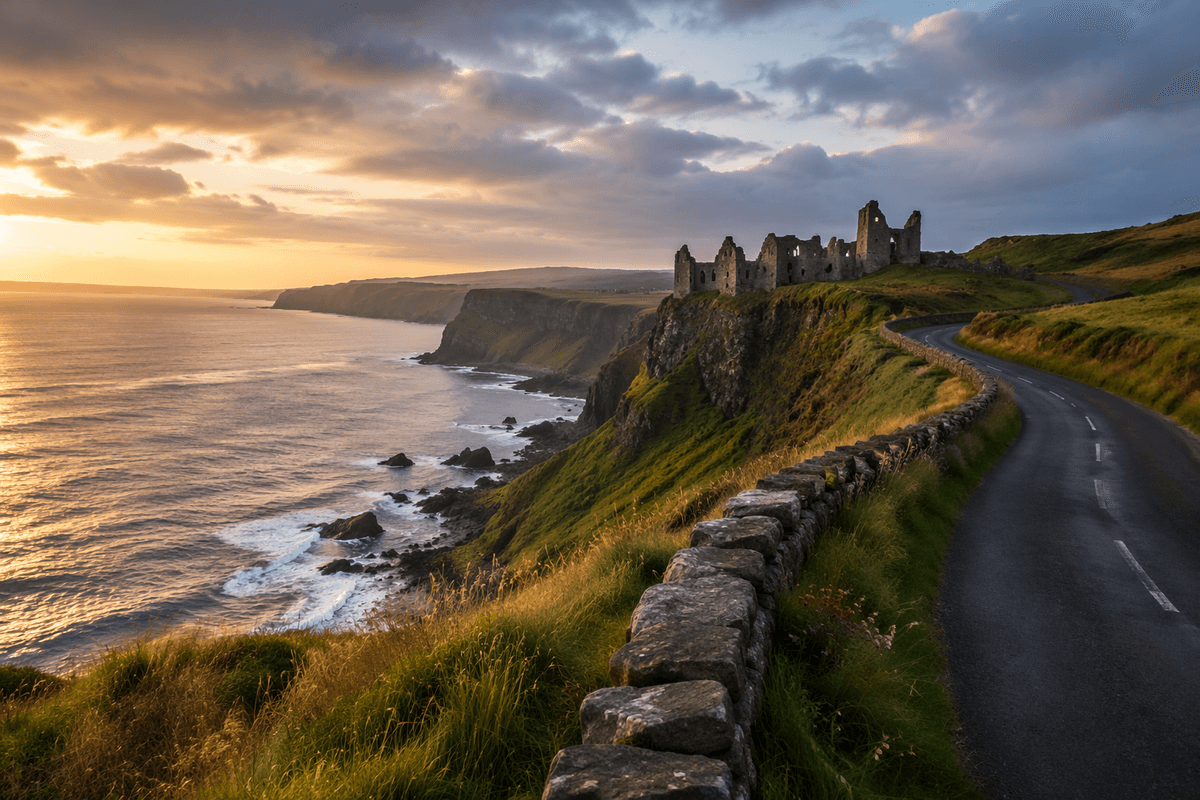
The first time I drove the Causeway Coastal Route, I made the classic mistake: I tried to “do it all” between breakfast and dinner, then wondered why every stop felt rushed. This coastline rewards a simple rule—pick one big walk, one castle, and one “pull-in-and-stare” viewpoint per day—because the road itself is part of the time cost. Even in summer, showers and low cloud can roll in fast enough that a cliff view is spectacular at 10:30 and flat-grey by noon, so you want a bit of slack to swap the order.
If you’re choosing anchors, Giant’s Causeway and Dunluce Castle are the obvious pair, but they come with different frictions: the Causeway can feel theme-park busy at peak hours, while Dunluce is quick and windy and can be a let-down if you arrive in bad visibility. I’ve had better luck treating the Causeway as an early or late stop (before the coaches), then using the middle of the day for places that “work” even when the weather is moody—Dark Hedges if you’re nearby, or a shorter cliff stretch where you can turn back without committing to a full hike.
On the driving side, the cliff-and-sea sections are beautiful but mentally taxing: narrow lanes, sudden tractors, and frequent pull-ins that tempt you to stop every five minutes. If you’re nervous behind the wheel, base in Portrush/Portstewart or Ballycastle for two nights and do the route in two loops instead of one long march—less heroic, more enjoyable, and it keeps you from arriving at viewpoints already tired.
Cities with stories: murals, museums, and nightlife
I realised I’d misjudged Belfast when I tried to “pop in” for an afternoon and got eaten alive by parking, one-way systems, and the temptation to tack on just one more museum. It’s a city that works best when you give it a proper block of time—either a full day without the car, or an evening plus a morning—because the friction isn’t distance, it’s switching gears from road-trip mode to city mode. If you’re staying central, paying for a hotel car park can sting, but it’s often cheaper than losing an hour circling for street space and arriving everywhere slightly stressed.
For first-timers, the murals and political history are the “why Belfast?” piece, but the experience changes depending on how you do it. A guided walk or taxi tour adds context you won’t get from photos, especially if you’re not steeped in the Troubles; the limitation is that it locks you into a schedule, and bad weather can make a long outdoor tour feel like endurance. Museums are the more weather-proof option (and kinder on energy), so on a rainy day it’s smart to swap in indoor time and save viewpoints for the next clearer spell.
Derry/Londonderry feels different: more compact, more walkable, and easier to do in a half-day without it turning into a sprawl. The wall walk and small museums give you a tight narrative arc, but nightlife is quieter and earlier-feeling than Belfast—great if you want a calm pint, less ideal if you’re expecting a late, sprawling night. If you only choose one city, decide based on your evenings: Belfast for variety and late options, Derry for density and a cleaner, less tiring itinerary.
Slow Northern Ireland: glens, lakes, and hidden villages
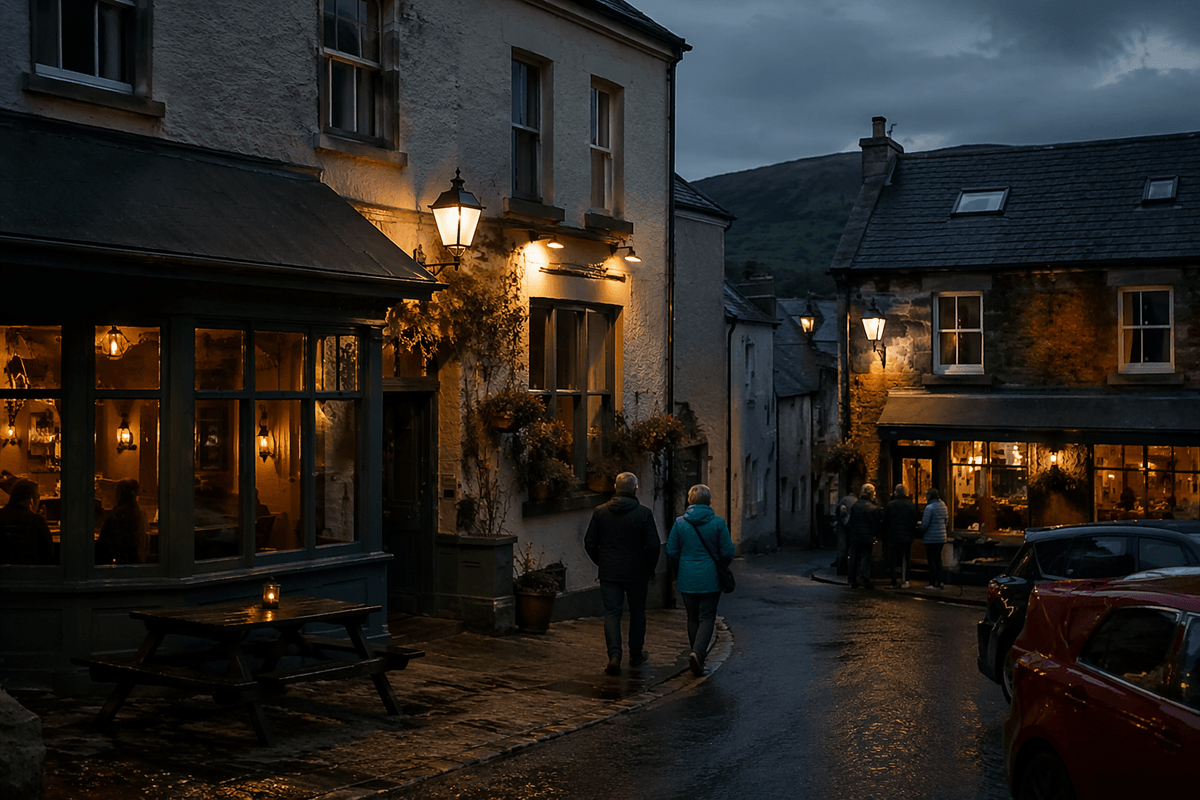
I felt the pace shift the moment the sat-nav stopped giving me “big attraction” pins and started offering minor roads with names I didn’t recognise. That’s where Northern Ireland gets quietly addictive—but it’s also where driving confidence matters most. The Glens of Antrim (and the smaller lanes that stitch them together) are gorgeous in any light, yet they can be narrow, bendy, and slow enough that a “quick detour” eats half a day. If you’re even slightly nervous, it’s worth choosing one glen-based base (Cushendall is a calm one) and doing short loops rather than trying to thread every viewpoint in one continuous drive.
Lough Erne is the other kind of slow: less dramatic-from-the-car-window, more “stop, breathe, walk a bit.” From Belfast or Derry it’s a longer reach, so it works best if you’re already committing to an inland night—Enniskillen makes the logistics simple and gives you an evening that doesn’t depend on perfect weather. The constraint is that the lakes reward lingering (a short shore walk, a castle stop, an unplanned café), and if you treat it like a pass-through on the way to somewhere else, it can feel oddly flat.
Hidden villages sound like a promise, but they’re not all equal once you factor in dinner options and early closures. When I’m planning, I prioritise places with at least two solid pubs or restaurants within walking distance—because after a day of tight roads and wind, driving again just to eat is the fastest way to make “slow” feel stressful.
Pulling it together: the journey you’ll remember
The moment it starts to feel manageable is when you stop trying to “win” Northern Ireland and instead choose a shape for the week. Option A is the clean loop: Belfast (2 nights, go car-light) → Causeway Coast (2 nights) → Derry (1–2 nights) and back, keeping your longest regular drives closer to that 1–1.5 hour range instead of stacking 2+ hour slogs. It costs you one extra check-out/check-in, but you buy better evenings and less backtracking.
Option B is the low-friction base plan: stay in Belfast and accept that the coast is often 1–1.5 hours each way—fine if you’re steady with early starts, tiring if you’re not. Option C is the north-first commitment (Derry or a coastal town), which makes the Causeway days calmer but quietly closes the door on “just popping” to the Mournes or Armagh without burning time. My realistic takeaway: book two-night stays, leave one half-day intentionally blank, and let the weather pick the order—your best memories usually come from that slack, not the checklist.