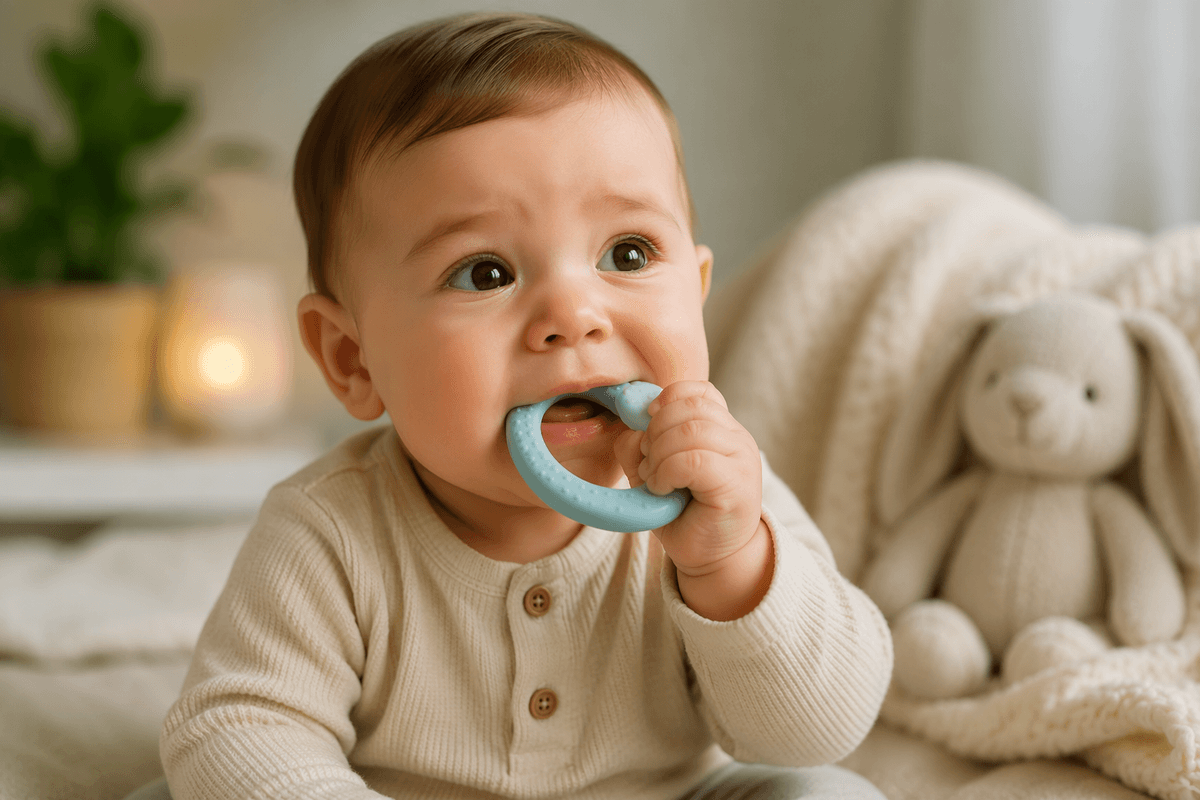
Why teething feels unpredictable for many babies
Some days it starts with a wet shirt collar by lunchtime, and other days your baby is happily chewing a toy with no drama at all. That swing can feel confusing when you’re watching for “the” teething signs, especially if last week included a couple of rough naps and now things look normal again.
Part of the unpredictability is that tooth movement isn’t constant. Pressure under the gums may build, ease, and build again as the tooth shifts, so the clues can come in bursts—more hand-to-mouth time, sudden fussiness when the pacifier falls out, or a shorter feed that picks back up later. It can look like a pattern, then disappear.
What makes it harder is the overlap with everyday baby changes. Around 4–12 months, drooling and chewing can also ramp up simply because they’re exploring more, and sleep or appetite can wobble for reasons that have nothing to do with gums. Teething may be in the mix, but it doesn’t always stay front and center.
Gum pressure and inflammation drive most classic signs
You might notice it most when your baby finally gets a good grip on a teether—and then suddenly drops it to rub their gums with a knuckle, like the pressure isn’t landing in the right spot. That “not quite satisfied” chewing can be a clue that something under the gumline is tender, even if your baby seems fine again an hour later.
When a tooth is pushing closer to the surface, the gum tissue above it can get a little puffy and sensitive. In those moments, biting down isn’t just exploration; it may briefly counter-pressure the soreness. Babies often cycle between wanting to chew, refusing the very thing they asked for, and getting upset when the pressure shifts—especially if you touch the gum by accident during a wipe or a spoonful.
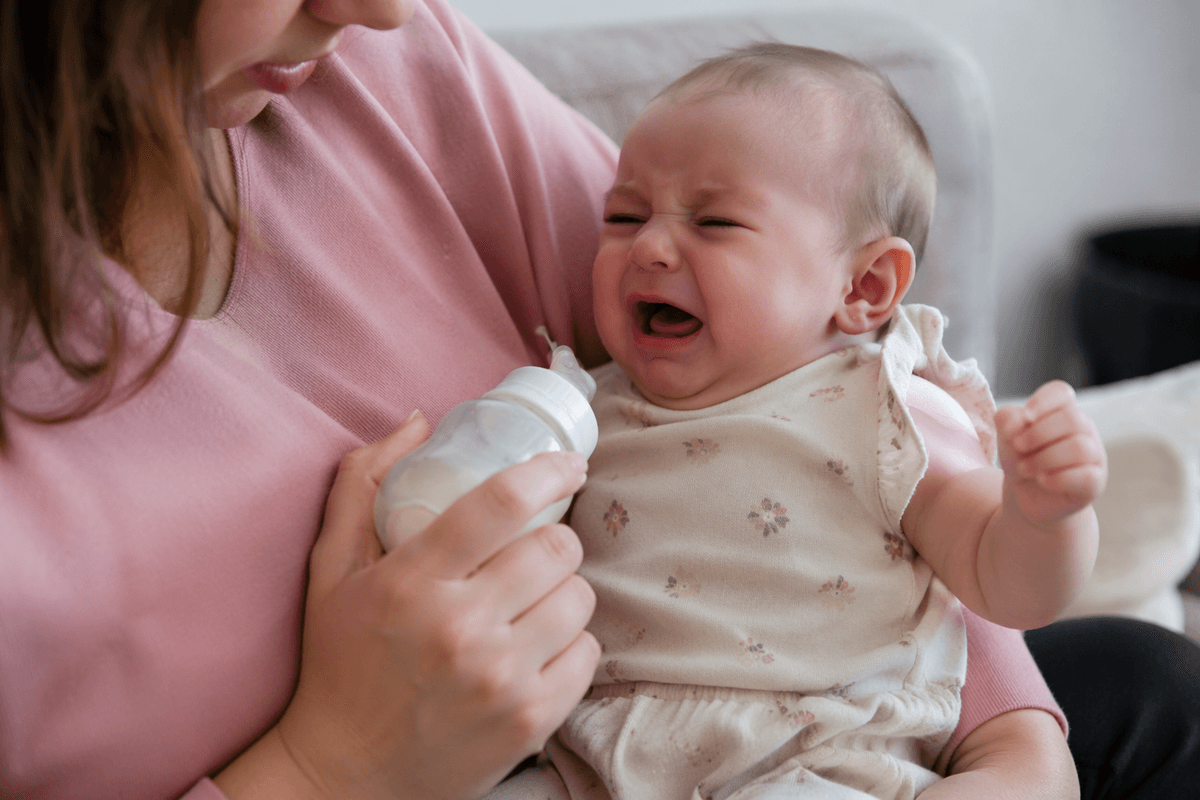
Feeding can get weird in a similarly uneven way. Sucking and swallowing change the pressure in the mouth, so a baby might start a feed eagerly, then pull off and fuss, then latch again when the discomfort eases. It can look like picky eating, but the pattern tends to come and go rather than steadily worsening.
Drool, rash, and sleep changes: the ripple effects
You notice it when you lift your baby after a feed: the front of their onesie is damp again, and there’s a shiny line of saliva sitting right at the edge of the chin. The drool can feel like a sign all by itself, but a lot of the irritation comes from what happens next—skin stays wet, fabric rubs, and that area doesn’t get much time to fully dry.
As saliva pools and spreads, it can leave a scattered red patch on the chin, cheeks, or upper chest that looks worse at the end of the day than it did in the morning. It may flare after long car rides, naps on a wet sleeve, or a day with constant hand-to-mouth play. That’s why the “rash” can seem to appear and disappear: the trigger is often repeated moisture and friction more than a single moment.
Sleep can shift for a similar reason—tiny discomforts stack up. A baby who can settle at bedtime may start waking more often later, when they’ve been lying still and the gum soreness is harder to ignore. But the pattern isn’t always clean; if wake-ups come with new congestion, a persistent cough, or a steadily worsening mood all day, it may be something riding alongside teething rather than teething itself.
Fussiness, pulling ears, and mixed signals caregivers notice
It can be a little startling when the fussiness shows up in short, sharp bursts—fine on your hip, then suddenly arching away as if something is wrong. Sometimes that swing happens when gum pressure flares and your baby can’t quite “place” where it hurts, so everything nearby feels like the problem: the spoon, the pacifier, even your finger near the mouth.
Ear pulling is one of the easiest mixed signals to misread. Babies tug their ears when they’re tired, bored, or winding down, and they also discover their ears right around the same months teething ramps up. On teething-heavy days, the rubbing can increase because the jaw and gums share nearby nerves and muscles—so discomfort in the mouth may make a baby fidget at the cheek, jawline, and ear area without it meaning the ear itself is the source.
What often points back toward teething is how inconsistent it is: cranky during feeds but playful ten minutes later, or a rough evening followed by a decent morning. When the irritability stays “on” all day, comes with a new fever, or your baby seems unable to settle no matter what you try, that’s when the signals stop matching the usual on-and-off teething rhythm.
What usually is not teething, despite timing
Sometimes it’s the timing that tricks you: your baby starts drooling more, then the next day they’re warm and clingy, and it’s easy to file everything under “teething.” But teething discomfort usually flickers—better after chewing, worse at certain moments—while some other issues feel more steady and body-wide.
A true cold often brings a different set of clues: new nasal congestion that makes sucking harder, a cough that wasn’t there before, or a voice that sounds a little raspy. Diaper blowouts or a big shift in stool can also show up around the same months, but gum pressure doesn’t typically explain ongoing vomiting or repeated watery stools.
And while a little temperature bump can happen when babies are uncomfortable and sleeping poorly, a clear fever that persists, or a baby who seems unusually sleepy or hard to soothe all day, usually points away from “just teeth.” In those moments, it helps to treat teething as one possibility—not the whole story.
Simple comfort approaches that match baby’s cues
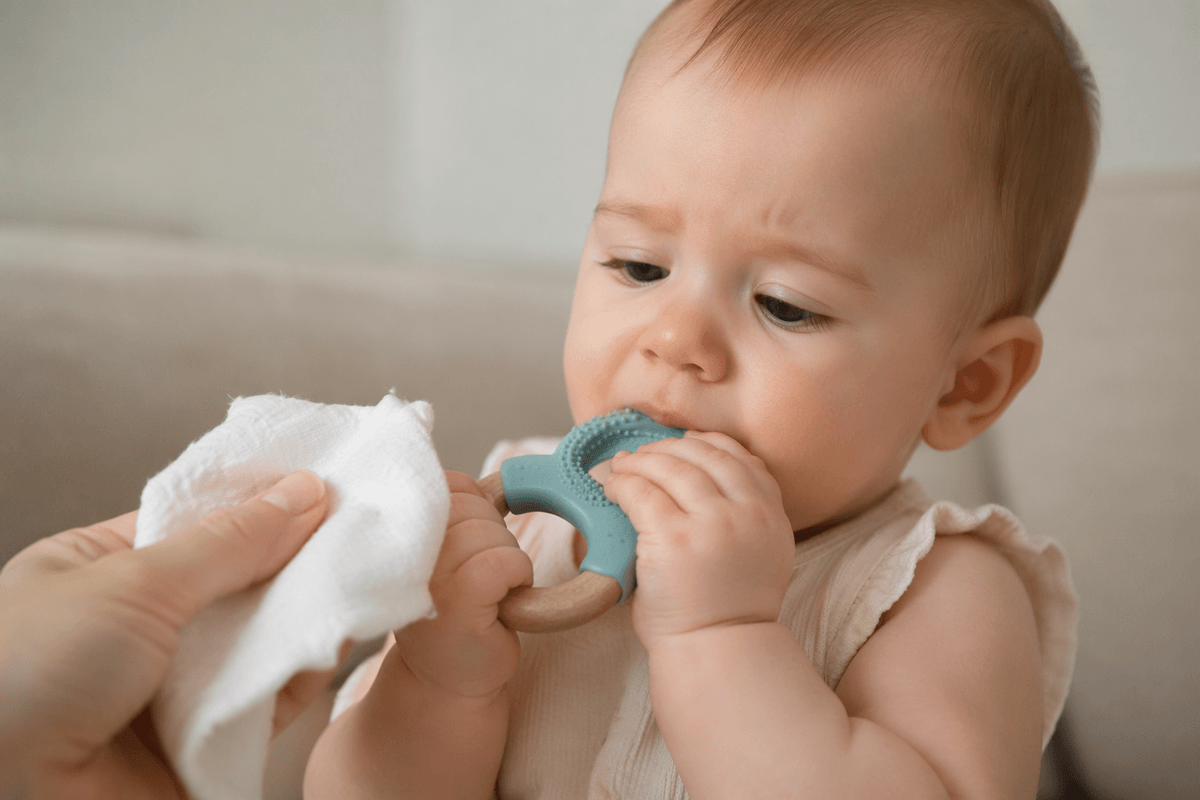
You can sometimes tell what kind of relief your baby is looking for by how they chew—steady, determined gnawing versus quick bites followed by rubbing their gums with a fist like they can’t quite settle. On the “pressure” kind of day, something firm enough to push back may hold their attention longer, while a softer toy gets abandoned fast. Other days, they seem to want motion more than chewing: bouncing on your knee, a slow walk around the room, anything that distracts from the mouth feeling.
Cold can be a mixed bag. Some babies calm right away with a chilled (not frozen) teether or a cool washcloth to mouth, and others get more irritated because the temperature change feels too sharp on tender gums. If you notice they clamp down harder and relax their shoulders, that’s often a good sign the sensation is helping. If they recoil, cry, or refuse anything that touches the gumline, it may be one of those hours when “helpful” input feels like too much.
Feeding comfort can also look counterintuitive. A baby might do better with shorter, more frequent feeds when sucking pressure starts to annoy them, then take a normal feed later when the soreness eases. What tends to trip caregivers up is expecting one solution to work all day—teething relief often works in small windows, and then needs to change as your baby’s cues change.
When a well-meant remedy backfires unexpectedly
It often happens in a small, frustrating moment: you offer the thing that helped yesterday, and instead of calming, your baby stiffens, cries, or shoves it away like you picked the wrong answer. A chilled teether can feel great when gums want counter-pressure, then suddenly feel “too much” when the tissue is extra tender. Even a well-aimed finger rub during a diaper change can backfire if you press near the sore spot and the sensation spikes instead of soothing.
Sometimes the backfire isn’t the mouth at all—it’s the side effects. A new topical product or extra wiping to manage drool can leave the chin and neck more irritated, so the next round of fussiness is really about stingy skin, not gums. And when babies chew hard on something bulky, they may gag or cough a bit, which can scare them (and you) and make them refuse the very item that was meant to help.
The reaction can look like a sudden “worsening,” when it may just be a mismatch between the moment and the remedy. If the same approach repeatedly triggers crying, gagging, or a spreading rash, that’s often a sign to pause rather than push through.
When to pause and check in with a clinician
Sometimes the shift is subtle: the drool is still there, but your baby’s face looks different—more drawn, less playful between fusses—and the day doesn’t have the usual “on, then off” rhythm. You might also notice they’re refusing feeds more consistently, or crying in a way that doesn’t settle after chewing, cuddling, or a change of scenery.
That’s usually the moment to pause and consider a check-in, especially if there’s a true fever, signs of dehydration (fewer wet diapers, dry mouth), breathing that seems harder, or a rash that’s spreading beyond the drool zone. Ongoing vomiting, repeated watery stools, or a new cough and congestion that keeps interfering with sleep and feeding also tends to fit illness more than gum pressure.
Teething can make a baby cranky, but if your gut says “this doesn’t look like my baby,” it’s reasonable to get guidance rather than waiting for the next tooth to explain it.